 EN
EN

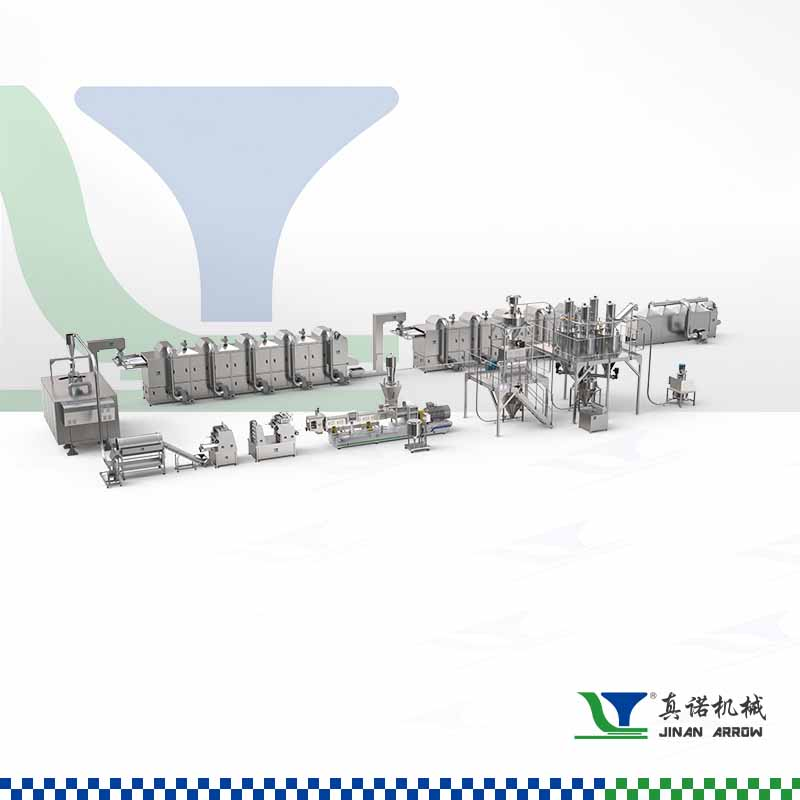
Understanding Moisture Equilibrium in Snack Pellet Extrusion
The initial stage of post-extrusion processing requires a thorough evaluation of internal moisture distribution within newly formed cereal intermediates. When managing a high-capacity snack pellet production line, moisture levels must be reduced systematically from initial shaping percentages down to stable storage thresholds. Food engineering specialists and drying consultants consistently emphasize that managing initial surface evaporation prevents structural cracking and preserves geometric integrity. Drawing from years of observing large-scale facility operations across diverse geographic regions, operations specialists note that establishing stable thermal baselines early in the dehydration cycle ensures uniform texture development during subsequent frying or expansion phases in international markets.
Optimizing Multi-Stage Thermal Dehydration Profiles
Effective industrial dehydration relies on progressive temperature management rather than exposing green materials to uniform high heat. Implementing a multi-stage thermal profile within a commercial snack pellet production line allows plant operators to apply gradual drying curves that match the natural moisture diffusion rate of the starch matrix. Food science authorities point out that stepping down thermal intensity progressively prevents case hardening, a common defect where outer layers dry prematurely and trap residual vapor inside. Proper thermal sequencing guarantees consistent product density and prepares intermediates for optimal expansion behavior across varied cultural consumer preferences.
Balancing Air Circulation and Chamber Ventilation
Internal airflow dynamics within the drying apparatus play a decisive role in eliminating dead zones and maintaining consistent atmospheric humidity. Upgrading ventilation controls on a snack pellet production line enables operators to fine-tune exhaust rates and recirculating fan speeds according to ambient atmospheric conditions and batch density. Industrial manufacturing experts note that precise pneumatic balancing prevents moisture re-condensation on upper drying tiers. By guiding heated air along predictable horizontal or vertical vectors, production facilities maintain steady evaporation rates without requiring manual tray rearrangement during continuous manufacturing shifts.
Monitoring Relative Humidity and Vapor Exhaust
Managing the saturation level of circulating air inside the drying chamber is just as important as supplying continuous thermal energy. As moisture evaporates from the product mass, the surrounding atmosphere absorbs humidity, which must be continuously expelled through optimized exhaust ports. Food processing specialists highlight that integrating automated humidity sensors within a snack pellet production line enables real-time damper adjustments, ensuring that exhausted air carries away maximum moisture without wasting thermal input. Effective exhaust management directly protects the color, structural integrity, and shelf-life stability of processed food intermediates during heavy-duty commercial runs.
Implementing Digital Control and Automation Systems
Modernizing industrial drying operations increasingly requires advanced digital oversight to monitor motor loads, thermal distribution, and conveyor feed rates continuously. Upgrading a snack pellet production line with programmable logic controllers and intuitive touchscreen interfaces allows operators to save specific recipe parameters and replicate them effortlessly across future production runs. Quality assurance specialists note that digital automation minimizes human error, stabilizes product specifications, and ensures consistent physical characteristics across large-scale manufacturing shifts, safeguarding brand reputation for global food distributors operating internationally.
Leveraging Industry Expertise and Manufacturing Partnerships
Sourcing reliable and adaptable food processing hardware ultimately depends on collaborating with seasoned manufacturing leaders who understand the complexities of snack extrusion engineering. Partnering with an experienced production source ensures that every technical specification meets international safety and performance standards. By leveraging the advanced engineering capabilities, strict quality control protocols, and dependable supply chain expertise of industry pioneers like EXTRUSNACK, food manufacturers can acquire a dependable snack pellet production line that drives long-term commercial success worldwide.
Table of Contents
- Understanding Moisture Equilibrium in Snack Pellet Extrusion
- Optimizing Multi-Stage Thermal Dehydration Profiles
- Balancing Air Circulation and Chamber Ventilation
- Monitoring Relative Humidity and Vapor Exhaust
- Implementing Digital Control and Automation Systems
- Leveraging Industry Expertise and Manufacturing Partnerships