 EN
EN
Introduction to Pellet Frying Lines
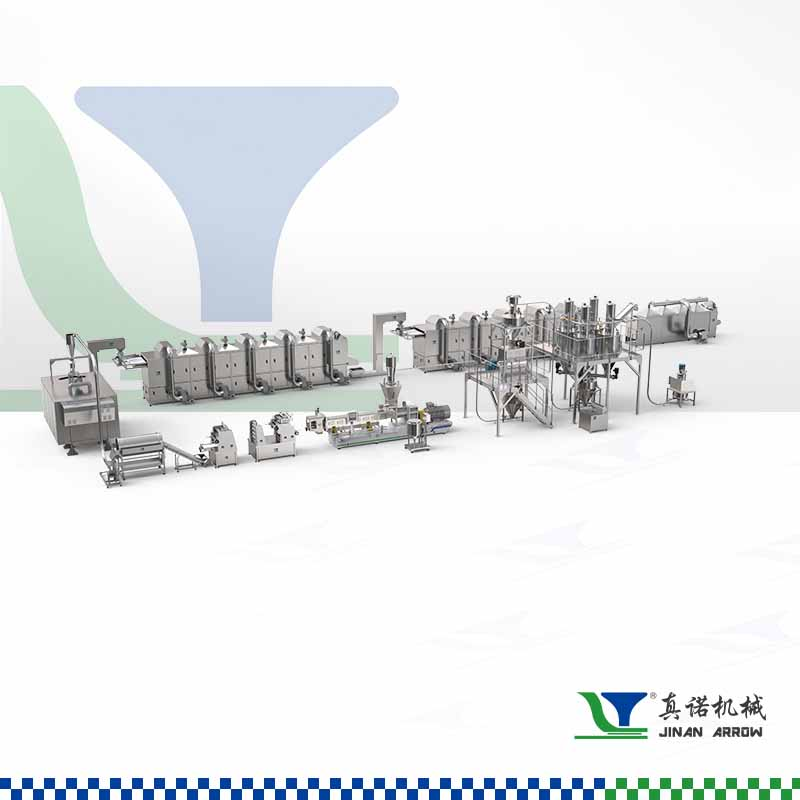
A pellet frying line is an industrial system that transforms starch-based raw materials into crispy, puffed snacks through continuous extrusion and frying. Unlike traditional batch frying, this automated process improves consistency and efficiency. A typical line includes a mixer, extruder, cutter, pre-dryer, continuous fryer, de-oiling belt, and flavoring drum. During extrusion, heat and pressure cook the dough, which is then shaped into pellets or direct-to-fry forms. After drying to reduce moisture, the pellets are fried in temperature-controlled oil to achieve the signature crunchy texture.
According to IMARC Group, the North American extruded snacks market was valued at USD 9.36 billion in 2024 and is projected to grow at a CAGR of 3.27% through 2033. This growth highlights why pellet frying lines have become essential equipment for snack manufacturers worldwide.
As a trusted equipment provider, Jinan Arrow Machinery Co., Ltd. has 19 years of experience in designing and selling food extruders. They have sold over 3,000 extruders and serve more than 4,500 factories globally across a 22,500 m² facility. Their pellet frying lines feature intelligent control systems that store production data for consistent quality. With CE certification, ISO 9001, and over 30 patents, the company offers reliable solutions. Their global team includes commissioning services and over 30 after-sales personnel, ensuring customers receive ongoing technical support.
2D Shaped Snacks (Flat Chips and Waved Chips)
Two-dimensional pellet snacks are among the most common products made on a pellet frying line. These flat or waved chips are produced by extruding dough through a flat die, cutting it into shapes, and then frying. Typical ingredients include potato starch, corn starch, cassava starch, and wheat flour, mixed with water and minor additives. The extrusion process gelatinizes the starch, creating a structure that expands during frying.
From my work with snack manufacturers across different regions, 2D chips offer great versatility. By changing the shaping die, a single pellet frying line can produce classic potato-style chips, waved chips, and even shrimp-flavored chips by adding seafood powder to the dough. This flexibility makes 2D snacks attractive for small and medium producers, as the process is simpler and requires lower investment than 3D shapes.
Technically, quality 2D chips depend on precise frying control. The oil temperature should be kept between 170°C and 190°C, and frying time must be adjusted based on pellet thickness and moisture. Modern pellet frying lines include continuous oil filtration to remove sediment and free fatty acids, which extends oil life and improves product consistency. For example, the Fabcon Food Systems PFS500 uses only 400 liters of oil in its 500 kg capacity model, achieving excellent oil turnover and reducing free fatty acids for longer shelf life.
3D Shaped Snacks (Three-Dimensional Pellets)
Three-dimensional pellet snacks represent a major innovation. Unlike flat chips, 3D snacks have volume and complex shapes such as shells, screws, spirals, square tubes, onion rings, or novelty forms like stars and dinosaurs. These are made using specialized shaping dies. The raw materials are similar to 2D snacks—potato starch, corn starch, wheat flour, and cassava starch—but the processing parameters differ.
Producing 3D snacks usually requires a two-stage frying process. First, a pre-fryer or pre-heater removes residual moisture at a lower temperature. This step prevents uneven expansion and poor texture. Pre-heater technology helps eliminate moisture gently, ensuring better expansion and crunchiness. Then, the pellets enter the main fryer, where they expand rapidly and become crispy. For instance, Kanchan Metals offers a pellet frying line with pre-fryer that handles 300–1000 kg per hour, with a double-wall fryer design that saves fuel and gives full control over frying parameters.
A key advantage of 3D snacks is their ability to hold seasonings. The complex surface area allows more flavor to stick compared to flat chips, resulting in a more intense taste per bite. This makes 3D snacks ideal for bold flavors like cheese, barbecue, sour cream & onion, and spicy blends. As consumer demand for novel snacks grows, many manufacturers are investing in 3D pellet lines. According to Mukul Shukla, Vice President of TNA North America, "Bold flavors, collaborations, and 'swicy' (sweet + spicy) products are also gaining traction as consumers seek novelty." For brands looking to stand out, 3D snacks offer a clear competitive edge.
Fryums and Ethnic Snacks (Namkeen, Golgappa, Panipuri)
Pellet frying lines are particularly successful at producing traditional ethnic snacks that have gained global popularity. Fryums, a popular Indian snack made from rice and urad dal (black gram), are a classic example. The pellet frying line extrudes the dough, cuts it into small shapes, dries the pellets, and then fries them to a light, crispy texture.
The same line can produce other ethnic products like sabudana (tapioca pearls), vatana (dried peas), and golgappa or panipuri shells—the hollow, crispy spheres used in Indian street food. These often need two-stage frying: a pre-fryer prepares the product, and the main fryer completes the expansion. According to Kanchan Metals, their pellet frying line with pre-fryer was specifically developed for fryums, namkeen ingredients, and other products requiring dual-stage frying. The double-wall fryer, with both direct and indirect oil heating options, provides fuel-efficient frying, and adding a pre-fryer to existing lines increases capacity.
These ethnic snacks present unique challenges because their raw materials have different moisture and starch compositions than standard potato or corn bases. However, modern pellet frying lines include HMI-PLC control systems for recipe management. Operators can save and recall parameters for different products, which is especially useful for contract manufacturers who switch products often. An integrated clean-in-place (CIP) system further reduces downtime by automatically cleaning the fryer interior, preventing cross-contamination. With the right equipment, one pellet frying line can produce dozens of ethnic snack varieties, giving manufacturers exceptional flexibility.
Kurkure-Style Extruded Snacks
Kurkure-style snacks—named after the popular Indian brand—are extruded, fried snacks with distinctive spiral or tube shapes and savory flavors. Unlike pellet-based products that are first formed into pellets and fried later, Kurkure-style snacks are often produced through direct extrusion and frying in a continuous process. A pellet frying line can accommodate this method by adjusting extrusion parameters and using appropriate shaping dies.
The main differentiator for Kurkure-style products is the inclusion of chickpea flour (besan) or other legume flours alongside traditional starches. This blend creates a unique texture and slightly nutty flavor. The extrusion process must be carefully controlled to achieve an expansion ratio of 2.5 to 3.5 times the original pellet volume, without making the final product greasy or tough. Continuous oil filtration and precise temperature control are essential. For example, the TNA conti-pro PEL 3 fryer uses a four-belt configuration to ensure even frying and thorough de-oiling.
Real-world results show the effectiveness of modern frying systems. One popcorn manufacturer that switched to an integrated line achieved sustained speeds of 140 bags per minute on 11g packs while keeping waste below 1%. Although popcorn is a different category, the same principles of precise control and system integration apply to Kurkure-style production. Integrating the frying line with downstream packaging equipment—as demonstrated by TNA Solutions at PACK EXPO Las Vegas 2025—represents the future of efficient snack manufacturing. For Kurkure-style producers, a fully integrated pellet frying line with intelligent controls can reduce labor costs, minimize waste, and boost overall efficiency.
Vegetable and Fruit-Based Pellet Snacks
As consumers seek healthier options, manufacturers are turning to vegetable and fruit-based pellet snacks. These products incorporate real vegetable powders (spinach, tomato, beetroot, carrot) or fruit purees into the dough, providing natural colors and enhanced nutrition. A pellet frying line is well suited for this application because extrusion and frying preserve much of the original nutritional content while creating an appealing crispy texture.
Producing vegetable-based pellets requires careful formulation. Vegetable powders absorb water differently than pure starches, and too much moisture can lead to poor expansion or excessive oil absorption. Based on my practical experience, start with a base of potato or corn starch, then add 10–15% vegetable powder by weight. The pellets should be dried to 8–10% moisture before frying to ensure proper expansion. Some manufacturers have succeeded with "better-for-you" snacks that are high in protein and fiber, meeting the growing demand for clean-label, nutritious products.
From a technical standpoint, vegetable-based pellets can be more challenging than standard starch-only formulas. Natural sugars in vegetables may cause browning or burning if frying temperatures are not carefully controlled. Fortunately, modern pellet frying lines with precise temperature control and continuous oil filtration can handle these products successfully. Low-oil-volume designs, such as those in the TNA conti-pro PEL 3, help maintain low free fatty acid levels and optimize product quality while extending shelf life. As the snack industry moves toward healthier choices, vegetable and fruit-based pellet snacks represent a growing opportunity for manufacturers willing to invest in the right equipment and expertise.
Frequently Asked Questions
Q1: What raw materials are needed to start producing snacks with a pellet frying line?
A1: The most common raw materials are potato starch, corn starch, cassava starch, and wheat flour. These starches form the base of most pellet snacks. You will also need water, salt, and optional seasonings or flavorings. For specialty snacks, you can add vegetable powders (spinach, tomato, beetroot), chickpea flour, or rice flour. Most manufacturers start with basic starch-based formulations and gradually expand their product range as they gain experience with the equipment.
Q2: How much production capacity can I expect from a pellet frying line?
A2: Production capacity varies significantly by equipment size and configuration. Small-scale lines might produce 100–200 kg per hour, while industrial lines can achieve 500–1,000 kg per hour or more. For example, some pellet frying lines with pre-fryer technology offer capacities from 300 kg/hr up to 1000 kg/hr. The actual output depends on product type, pellet size, frying time, and the number of shifts operated daily. When selecting equipment, consider your target market size and growth projections to choose an appropriate capacity.
Q3: Is a pellet frying line difficult to operate and maintain?
A3: Modern pellet frying lines are designed for user-friendly operation. Most systems feature HMI-PLC control panels that store recipes for different products, allowing operators to switch between snack types with minimal setup time. Automatic systems handle mixing, extrusion, cutting, frying, and de-oiling with little manual intervention. Maintenance requirements are generally moderate, involving regular cleaning of the fryer (many units have integrated CIP systems), checking oil quality, and periodic inspection of moving parts. Manufacturers typically provide training and commissioning services to ensure a smooth startup.