 EN

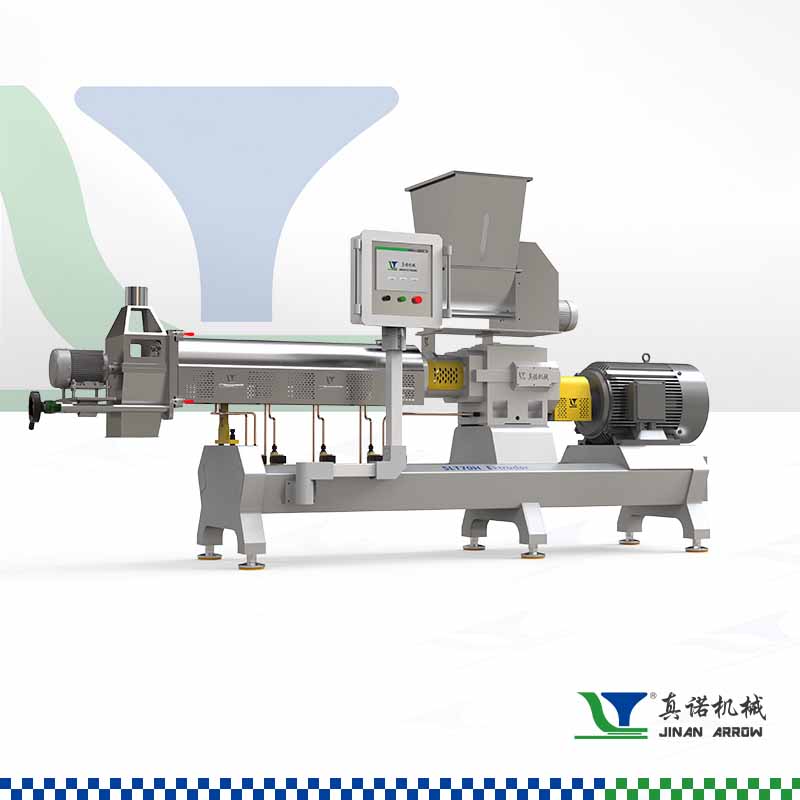
How Breakfast Cereal Machines Support Multi-Grain Production
A modern breakfast cereal machine must handle multiple grains in a single continuous line without sacrificing texture or throughput. Multi-grain recipes blend oats, barley, rice, and quinoa—each with distinct moisture uptake, expansion behavior, and starch gelatinization profiles. Without precise feed and thermal control, these differences cause density variation, surface cracks, and inconsistent bowl life. Two core capabilities determine whether a line can reliably produce multi-grain flakes, puffs, or clusters: ingredient flexibility and precision feeding.
Ingredient Flexibility: Blending Oats, Barley, Rice, and Quinoa in Single-Line Production
A breakfast cereal machine designed for multi-grain production must process oats, barley, rice, and quinoa in one continuous line—without separate processing streams. These grains differ sharply in hardness, oil content, and water absorption: oats require gentle hydration to preserve beta-glucan; barley needs longer steam exposure to soften its fibrous hull; rice cooks rapidly and risks stickiness if over-conditioned; and quinoa carries saponins that demand rinsing or polishing before flaking.
Modern single-line systems address this through adjustable preconditioners, interchangeable mixing paddles, and variable steam injection—enabling operators to tune retention time and moisture by recipe. Instead of shutting down between products, the line transitions from an oat-based flake to a barley-rice-quinoa blend within a single run. A line producing oat flakes in the morning can shift to a tri-grain blend later—no barrel replacement needed. This flexibility shortens trial cycles and supports rapid response to demand for ancient grains. But it also demands strict sequencing to avoid cross-contamination and uneven cook. Downstream flaking and drying must be equally adaptable, with roll gaps and air temperature adjusted to match each grain’s expansion behavior and final moisture target.
Precision Feeding Systems for Variable Bulk Density and Particle Size
Multi-grain recipes create significant metering challenges due to wide variations in bulk density and particle size. Oats flow at roughly half the bulk density of milled rice, while quinoa’s small, spherical seeds are prone to bridging more than flaked barley. Volumetric feeders alone drift when density shifts—causing uneven cook and inconsistent flake thickness.
Multi-grain lines therefore rely on gravimetric or loss-in-weight feeders paired with PLC-controlled hoppers and mass-flow aids. These systems measure mass—not volume—and automatically adjust screw speed as the batch shifts from light oats to dense rice. This prevents starvation or overfeeding at the extruder inlet and ensures uniform starch gelatinization. Vibratory trays and specialized agitators manage irregular particles without segregation or bridging. Operators can store density curves for each recipe, enabling faster changeover without manual recalibration. The result is a steady, homogeneous grain stream that maintains consistent moisture, reduces waste, and delivers repeatable texture—especially critical as throughput increases and manual corrections become impractical.
Key Technical Adjustments for Reliable Multi-Grain Processing
Thermal Profile Optimization Across Grains with Divergent Gelatinization Temperatures
Oats, barley, rice, and quinoa begin starch gelatinization at markedly different temperatures—spanning 20–30 °C. Oats initiate near 55 °C, barley and quinoa near 60–65 °C, and rice often requires above 75 °C. A flat thermal curve across the extruder barrel risks undercooked centers in rice or overcooked, gummy oats.
Operators resolve this using staged heating zones. A typical profile may set the preconditioner at 60 °C for initial hydration, the mid-barrel at 95 °C to fully gelatinize rice, and the final zone at 120 °C for puffing and flash-off. The goal isn’t equal grain temperature—it’s uniform starch transformation across the mix.
| Grain | Typical Gelatinization Onset | Processing Implication |
|---|---|---|
| Oats | 55–60 °C | Needs early hydration; over-processing creates gumminess |
| Barley | 60–65 °C | Tolerates moderate heat; supports structural integrity |
| Quinoa | 60–65 °C | Small particle size; prone to scorching in high-shear zones |
| Rice | 75–85 °C | Requires higher mid-barrel energy for full expansion |
Tuning steam injection and screw speed allows one line to hold these windows simultaneously. Real-time temperature sensors at each zone reduce reliance on guesswork—delivering denser, more consistent multi-grain flakes or puffs without recipe-wide overheating.
When 'Multi-Grain Ready' Isn’t Enough: The Reality of Line-Specific Retrofitting
Many machines are marketed as “multi-grain ready”—but that label rarely means plug-and-play compatibility with tri-grain recipes. Existing screw profiles, die plates, and dryer belts typically reflect the friction and expansion behavior of a single grain.
Retrofitting starts with a material audit. Bulk density and particle size distribution alone can shift back-pressure by 10–15% when switching from corn to a barley-quinoa blend, according to 2023 processing benchmarks. A worn screw may need a revised compression ratio. A standard die may require wider openings to prevent shear thickening. Drying time often increases because mixed grains release moisture unevenly.
Line-specific retrofitting is therefore a necessary cost—not an optional upgrade. Budget 8–15% of the original machine price for feeder calibration, screw changes, and control updates. Skipping these steps leads to surging, density drift, and higher scrap rates. A truly reliable multi-grain process rarely emerges from factory default settings. It results from measuring the line’s current thermal and mechanical limits—and adjusting them precisely to the recipe.
Balancing Output, Consistency, and ROI in Multi-Grain Operations
Throughput and Yield Trade-Offs: 12–18% Reduction When Switching to Tri-Grain Recipes
Running a breakfast cereal machine across multiple grains typically lowers throughput. Multi-grain recipes force the extruder and dryer to accommodate variable gelatinization points and particle sizes—slowing preconditioning, widening moisture control bands, and increasing cleanout frequency. Production benchmarks from 2023 show a 12–18% output drop when moving from single-grain to tri-grain blends.
Yield also declines, as fines increase when hard grains like quinoa interact with softer oats—raising the cost per kilogram and eroding ROI. Production planners can mitigate this by batching similar grain families, scheduling longer runs, and using gravimetric hoppers instead of timed augers. A well-tuned line may recover 6–8 percentage points of lost throughput—keeping multi-grain products commercially viable without compromising margin.
Case Study: Swiss Manufacturer Achieves 92% Batch Consistency Using PLC-Driven Volumetric Feeders
A Swiss cereal producer replaced fixed-speed augers with PLC-driven volumetric feeders across three breakfast cereal lines to improve consistency in a four-grain recipe. After commissioning, batch consistency reached 92%, measured by starch gelatinization and moisture content in a 2023 line audit. The PLC system adjusts feed pulses every 300 milliseconds—compensating for real-time shifts in bulk density between oat flakes and barley flour. This precision cut recipe drift by nearly half and reduced rework. Energy use dropped by 7% as dryers no longer corrected uneven moisture. Payback occurred in just under three years—matching typical ROI timelines for medium-scale cereal operations. The case confirms that multi-grain output need not mean compromised quality—when feeding is controlled dynamically.
Future-Proofing Your Breakfast Cereal Machine for Multi-Grain Innovation
Modular Extruders and AI-Driven Recipe Scaling for Agile Product Development
Modular extruders let operators swap barrel sections, screw profiles, and die plates without replacing the entire line. Paired with AI-driven recipe scaling, the system automatically adjusts feed rate, moisture, and shear for quinoa, amaranth, or barley blends. This shortens changeover, supports small-batch trials, and accelerates validation of new multi-grain concepts—all while preserving capital investment. As grain mixes evolve, the same platform handles flaked, puffed, or shredded formats with minimal reconfiguration.
Real-Time NIR Monitoring of Starch Gelatinization in Heterogeneous Grain Mixes
Near-infrared (NIR) sensors mounted at the extruder outlet track starch gelatinization in real time. Because oats, rice, and millet hydrate and cook at different rates, fixed temperature setpoints often fail. NIR monitoring captures moisture and gelatinization markers—enabling closed-loop adjustments to barrel temperature and residence time. This reduces overcooked fines and undercooked centers, improving batch uniformity even as grain ratios shift from run to run. The result is a more stable, responsive process for heterogeneous grain mixes.
FAQs about Breakfast Cereal Machines for Multi-Grain Production
What is the importance of ingredient flexibility in a cereal machine?
Ingredient flexibility allows breakfast cereal machines to process various grains, such as oats, barley, rice, and quinoa, in a single production line. This adaptability reduces downtime between product runs, ensures efficient transitions, and helps meet the evolving demand for multi-grain products.
How do precision feeding systems work in multi-grain cereal production?
Precision feeding systems, such as gravimetric or loss-in-weight feeders, measure mass instead of volume and adjust feed rates in real time. This ensures that grains with varying bulk densities and particle sizes are consistently metered into the extruder, leading to uniform cooking and high-quality end products.
Why is thermal profile optimization important for multi-grain processing?
Multi-grain recipes include grains with different starch gelatinization temperatures. Optimized thermal profiles involving staged heating zones ensure uniform cooking and starch transformation across various grains, preventing issues like undercooked or overcooked products.
What are some challenges of retrofitting cereal production lines for multi-grain recipes?
Retrofitting challenges include the need to adjust screw profiles, die plates, and dryer belts to accommodate different grain types. The process also requires calibrating feeders and updating control systems to adapt to varying bulk densities and particle sizes in multi-grain recipes.
How can modular extruders and AI technology enhance cereal machine capability?
Modular extruders enable operators to easily swap out parts like screw profiles and die plates, while AI-driven recipe scaling automatically adjusts various parameters. Together, these technologies improve the flexibility of cereal machines, enabling quick adaptation to new grain mixes and product formats.
Table of Contents
- How Breakfast Cereal Machines Support Multi-Grain Production
- Key Technical Adjustments for Reliable Multi-Grain Processing
- Balancing Output, Consistency, and ROI in Multi-Grain Operations
- Future-Proofing Your Breakfast Cereal Machine for Multi-Grain Innovation
-
FAQs about Breakfast Cereal Machines for Multi-Grain Production
- What is the importance of ingredient flexibility in a cereal machine?
- How do precision feeding systems work in multi-grain cereal production?
- Why is thermal profile optimization important for multi-grain processing?
- What are some challenges of retrofitting cereal production lines for multi-grain recipes?
- How can modular extruders and AI technology enhance cereal machine capability?