 EN

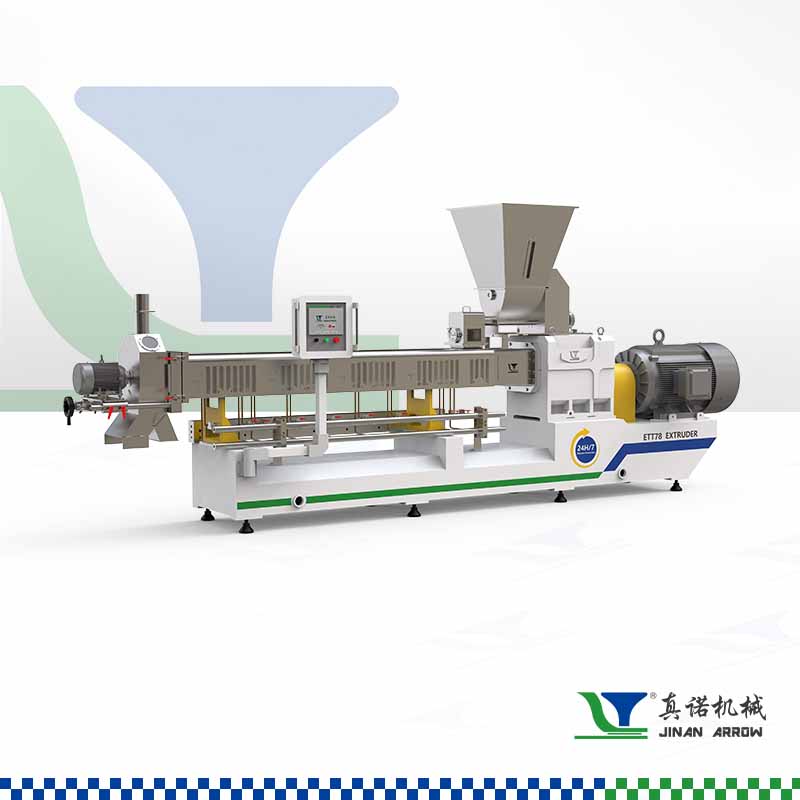
Precision Process Control in Cheeto Extruder Systems
In high-output snack manufacturing, a cheeto extruder must hold multiple process variables within narrow bands to produce consistent texture, shape, and density. The following subsections cover thermal control, moisture feedback, and screw-to-feed synchronization.
Zone-Specific Thermal Management for Optimal Starch Gelatinization
Starch gelatinization in cornmeal-based snacks is temperature-dependent: if the barrel is too cool, ungelatinized grit remains; if too hot, dextrinization creates bitter notes and darker color. Multi-zone heating and cooling lets operators stage the melt profile from feed throat to die. PID (proportional–integral–derivative) controlled heater bands, thermocouples, and cooling jackets maintain each zone independently. A 2006 extrusion control study reported barrel temperature stability within ±2.5°C and melt pressure within ±0.5 MPa—key metrics for minimizing flow instability. Each zone acts as a controlled thermal reservoir, with heating and cooling response tuned to the thermal mass of the screw and barrel. For cheeto-type expanded snacks, the middle and metering zones typically hold temperatures between 120°C and 160°C, while the final zone trims melt temperature before the die. This zoning is especially important because corn starch gelatinization has a narrow process window of roughly 70–85°C for initial swelling, followed by higher finishing temperatures to enable expansion. Deviations of even a few degrees can alter melt viscosity enough to affect die swell and final shape. Zone-specific control prevents scorching, supports uniform starch gelatinization, and enables faster grade changes. Modern systems may layer model-predictive control over PID loops, adjusting adjacent zones to prevent overshoot. Consistent thermal history translates directly into uniform expansion, surface texture, and color.
Real-Time Moisture Feedback Loops and Hydration Stability
Moisture content directly affects starch melt viscosity, torque, and final puff structure. Too little water raises melt viscosity and specific energy; too much reduces expansion and creates steam pockets. Loss-in-weight gravimetric feeders can hold dry feed mass within ±0.2%, but hydration stability also requires in-line near-infrared or capacitance sensors placed before the die. A real-time feedback loop adjusts water injection or steam flow to keep moisture within ±0.5% of target—faster and more reliable than periodic lab sampling, which can lag production by several minutes. Feed-forward signals from preconditioner moisture sensors anticipate upstream changes before they reach the extruder barrel. Because corn meal moisture varies with storage conditions, dynamic compensation prevents surging, die blockage, and density drift. Closed-loop moisture control reduces startup waste and stabilizes expansion from batch to batch—especially valuable in high-capacity lines where off-spec product accumulates quickly. Operators can trend moisture against torque, melt pressure, and barrel temperature to locate the optimum hydration window. Maintaining that window keeps cheeto extruder output consistent without manual trim.
Screw Speed–Feed Rate Synchronization with Energy Efficiency Optimization
Screw speed and feed rate together determine specific mechanical energy, residence time, and barrel fill. If screw speed is too high relative to feed rate, barrel fill drops and expansion suffers; if too low, the barrel overfills, torque rises, and energy waste increases. Inverter-controlled motors synchronize both parameters and maintain setpoints within tight limits. Process controllers adjust feed rate to follow screw speed changes during startup or grade transitions. This synchronization keeps the melt within the starch gelatinization window while reducing kWh per kilogram. Energy efficiency improves because mechanical shear supplies more of the needed heat, reducing barrel heater load. A well-tuned ratio also protects screw and barrel surfaces from unnecessary wear. Deviations in either direction can shift product density by several percentage points. Operators often monitor specific mechanical energy as a key performance indicator for synchronized extrusion. The result is stable expansion and density without excess drive power.
Consistent Snack Expansion via Engineered Die Geometry
Radial Flow Distribution and Swell Ratio Calibration for Uniform Cheeto Shape
Radial flow distribution inside a cheeto extruder die determines whether each nozzle receives equal melt pressure and velocity. Uneven channel geometry can starve outer orifices and produce irregular expansion. Engineers calibrate swell ratio—the post-exit diameter divided by die orifice diameter—by adjusting land length, inlet angle, and nozzle diameter-to-length ratio. Simulation-guided design helps balance shear history and pressure drop across the die face, reducing shape distortion before cutting. Calibration also accounts for starch viscoelasticity: higher amylopectin melts tend to swell more at the die exit. Operators then fine-tune moisture and die temperature to hold swell ratio within a narrow band. This integrated control yields consistent piece diameter, length, and surface porosity—so every snack retains the expected curly, puffed geometry without excessive breakage or waste.
Texture and Density Optimization Using Rheology-Guided Extrusion
Rheology-guided extrusion helps operators fine-tune texture and density in a cheeto extruder by linking melt viscosity, expansion, and mechanical response. The two techniques below turn lab-style texture data into real-time control targets.
In-Line Dual-Energy X-ray Density Monitoring and Bite Force Correlation
Dual-energy X-ray systems pass two X-ray beams through the extrudate. The attenuation ratio reveals local density without destroying the sample. Operators compare this live density value with offline bite force tests. Higher density usually means a harder, less crispy product; lower density reflects more air cells and a softer bite. A 2024 process study found that inline density readings tracked laboratory compression force within an average error of 3.2%. That tight correlation lets line operators adjust barrel temperature or screw speed before texture drifts out of specification. Regular calibration against helium pycnometry or volumetric methods keeps the X-ray output reliable. This approach cuts destructive sampling time and speeds up process decisions. The result is consistent mouthfeel and fewer rejected batches.
Texture Profile Analysis (TPA) Integration with Cheeto Extruder Output Parameters
Texture Profile Analysis (TPA) measures hardness, cohesiveness, springiness, and chewiness on a small extrudate sample by compressing it twice to simulate chewing. Plant teams map these TPA values to extruder settings such as screw speed, feed rate, and final barrel temperature. For example, raising screw speed often lowers hardness by increasing shear and starch breakdown; lower moisture in the preconditioner generally raises density and fracturability. A 2023 correlation model reported that screw speed and moisture content explained 88% of hardness variation in corn-based puffs. This integration gives operators a predictive tool—they can adjust the extruder in advance, not after a full texture lab cycle. TPA data also supports statistical process control charts for long-term consistency. Periodic lab confirmation keeps the model accurate as raw material changes.
FAQ
What is the primary function of a cheeto extruder?
A cheeto extruder is designed to control multiple process variables like temperature, moisture content, and feed rate to produce snacks with consistent texture, shape, and density.
Why is thermal management important in cheeto extruders?
Thermal management is crucial for maintaining the right temperature for starch gelatinization in cornmeal-based snacks, ensuring consistent texture, shape, and color while avoiding issues like scorching or flavor degradation.
What role does moisture control play in cheeto production?
Moisture affects melt viscosity, torque, and the final structure of the snack. Maintaining moisture within tight limits ensures consistent texture, proper expansion, and reduces product waste during production.
How does screw speed and feed rate synchronization impact cheeto extrusion?
Screw speed and feed rate synchronization help maintain specific mechanical energy and ensure the right melt consistency, minimizing energy waste and protecting equipment from wear and tear.
What is the significance of radial flow distribution in extruder dies?
Radial flow distribution ensures that each nozzle in the extruder die receives equal melt pressure and velocity, producing snacks with consistent shape and texture while minimizing deformation.
How does rheology-guided extrusion optimize snack texture and density?
Rheology-guided extrusion links melt viscosity, expansion, and mechanical response. Techniques like dual-energy X-ray density monitoring and Texture Profile Analysis (TPA) enable real-time adjustments for optimal texture and density.
Table of Contents
- Precision Process Control in Cheeto Extruder Systems
- Consistent Snack Expansion via Engineered Die Geometry
- Texture and Density Optimization Using Rheology-Guided Extrusion
-
FAQ
- What is the primary function of a cheeto extruder?
- Why is thermal management important in cheeto extruders?
- What role does moisture control play in cheeto production?
- How does screw speed and feed rate synchronization impact cheeto extrusion?
- What is the significance of radial flow distribution in extruder dies?
- How does rheology-guided extrusion optimize snack texture and density?