 EN

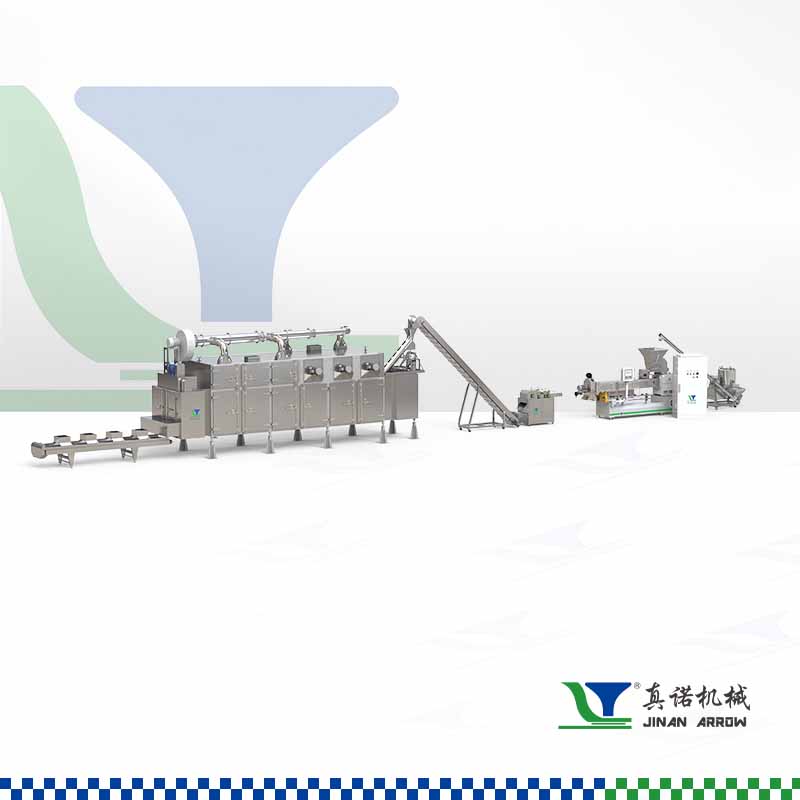
Core Stages of the Automatic Chinchin Production Line
Dough preparation, extrusion, and cutting: ensuring uniform texture and shape
An automatic chinchin production line begins with precision dough preparation. Ingredients—wheat flour, sugar, fat, water, and leavening agents—are metered and mixed in a continuous or batch mixer to achieve consistent hydration, temperature, and elasticity. Automated dough resting relaxes gluten, preventing shrinkage during shaping. The dough then enters a low-shear extruder that presses it through a die plate to form a sheet of uniform thickness. Chilled rollers or air knives prevent sticking, while edge trimmers recycle excess dough directly back to the mixer. A servo-driven rotary or guillotine cutter slices the sheet into strips, squares, or diamond shapes per product specifications—maintaining dimensional accuracy within ±0.5 mm. This precision eliminates the variability inherent in manual cutting, ensuring consistent weight, thickness, oil absorption, and final texture. Accurate metering and mixing also support recipe repeatability, traceability, and downstream frying efficiency.
Precision frying and de-oiling: temperature control, oil management, and food safety compliance
Precision frying is the thermal core of the chinchin production line. Continuous fryers use PID temperature control to maintain oil within a narrow band—typically 170–185°C—to prevent scorching or undercooking. Multi-zone heating and automated oil circulation ensure uniform heat transfer across the full width of the fryer. Integrated oil management systems filter particulates and reduce free fatty acid accumulation, extending oil life and lowering operating costs. Immediately after frying, a vibratory or centrifugal de-oiling conveyor removes surface oil via gravity and controlled airflow—reducing final oil content, improving mouthfeel, and supporting shelf stability. Operators monitor polar compounds and moisture levels to meet Hazard Analysis and Critical Control Points (HACCP) requirements, with automated alarms for temperature deviation or filtration pressure. This integrated approach delivers the signature crunchy exterior and light interior texture while minimizing human error and batch variation.
Cooling, seasoning, and hygienic packaging integration for shelf-stable output
After de-oiling, chinchin moves onto a multi-zone cooling conveyor that reduces product temperature below 30°C before seasoning. Rapid, controlled cooling prevents moisture migration and oil bleed—key causes of softness and oxidative rancidity. A rotating seasoning drum applies salt, sugar, or spice blends evenly, using programmable dosage control for batch-to-batch consistency. Integrated metal detection and checkweighing remove contaminated or underweight pieces prior to packaging. Hygienic vertical form-fill-seal machines fill pouches or bags in a clean environment, often with nitrogen flushing to displace oxygen. Moisture-barrier films preserve crispness and extend shelf life without artificial preservatives. By linking cooling, seasoning, and packaging in one continuous flow, the line minimizes manual handling, reduces recontamination risk, and supports compliance with food safety certification standards—including BRCGS and ISO 22000.
Key Machinery Selection for a Reliable Chinchin Production Line
Automatic chinchin cutter and extruder: sizing accuracy, material compatibility, and throughput capacity
Selecting the right cutter and extruder determines whether a chinchin production line can sustain shape consistency at scale. For uniform frying and minimal rejects, equipment must maintain sizing accuracy within ±1 mm—even during high-volume runs where mixed dimensions cause uneven cooking and higher waste. Because chinchin dough is dense and may contain sugar, milk solids, or spices, all wet-contact components—including hopper, auger, and cutting blades—must be food-grade stainless steel with non-stick surfaces to prevent buildup and reduce cleaning downtime. Throughput capacity must align with upstream mixing and downstream frying rates: mid-range units typically handle 100–300 kg/h, while industrial models exceed 500 kg/h. Die sets should support multiple shapes—square, rectangular, or twisted—without requiring drive-system modifications. Quick-release cutter assemblies and variable-speed controls further improve changeover efficiency, reduce startup waste, and help stabilize piece weight across shifts.
Industrial fryers (electric/gas) with PID temperature control and continuous de-oiling systems
Industrial frying systems must hold oil temperature within ±2°C to avoid greasy, pale, or scorched pieces. PID temperature control responds faster than simple on-off thermostats, minimizing heat recovery lag when cold dough enters the fryer. Both electric and gas options are viable: gas is often preferred for high-volume lines due to lower energy cost per kilogram, while electric offers cleaner indoor operation and finer zoning control. Continuous de-oiling—via vibrating or centrifugal conveyors—removes surface oil immediately post-frying, lowering final oil content, supporting longer shelf life, and recovering edible oil for reuse. These systems also reduce clogging risks in downstream cooling or seasoning equipment. Essential features include sediment removal, automated filtration, and accessible hoods for routine sanitation and food safety audits. A well-matched fryer avoids bottlenecks and ensures seamless integration with the extruder-cutter and de-oiling modules.
Designing for Scalability and Operational Efficiency
Modular chinchin production line configurations: from 50 kg/day SME setups to 500+ kg/h large-scale lines
A scalable chinchin production line uses modular stations for dough preparation, extrusion, frying, de-oiling, cooling, and packaging—each designed for interoperability and independent monitoring. Small and medium enterprises can begin with a compact 50 kg/day configuration: one extruder, one cutter, and a batch fryer. As demand grows, operators can add parallel fryer banks, extended cooling zones, or additional seasoning drums—all built on the same control architecture and quick-change tooling. Large-scale lines often deploy fully parallel modules to exceed 500 kg/h while preserving uniformity in piece size, oil uptake, and final moisture. This staged expansion protects initial capital investment and allows staff to master one process before scaling. Because each module operates under standardized hygiene and safety protocols, food safety compliance remains consistent during growth. A modular footprint also maintains service access for sanitation and maintenance—reducing unplanned downtime and supporting long-term operational reliability. In practice, this design enables a clear upgrade path—from artisanal batches to continuous industrial output—without system-wide redesign.
Frequently Asked Questions
What ingredients are typically used in chinchin dough preparation?
Chinchin dough typically consists of wheat flour, sugar, fat, water, and leavening agents. These ingredients are mixed to achieve hydration, temperature consistency, and elasticity for efficient processing.
Why is precise frying important in chinchin production?
Precise frying ensures uniform heat transfer, maintains oil temperature within a narrow range (170–185°C), and prevents undercooking or scorching. It also supports the signature crunchy texture and shelf stability of chinchin.
How does a modular production line benefit operational scalability?
Modular configurations enable businesses to start with small batches and expand throughput as demand grows. This staged approach ensures interoperability and compliance with food safety standards, minimizes initial investment, and protects long-term reliability.
What are the advantages of using industrial fryers with PID temperature control?
PID temperature control offers responsiveness and precise heat management, maintaining oil temperature within ±2°C and reducing recovery lag. This ensures uniform frying quality and improves energy efficiency.
How does packaging extend chinchin's shelf life?
Packaging with moisture-barrier films and nitrogen flushing preserves crispness and prevents oxidative rancidity, extending chinchin's shelf life without relying on artificial preservatives.
Table of Contents
- Core Stages of the Automatic Chinchin Production Line
- Key Machinery Selection for a Reliable Chinchin Production Line
- Designing for Scalability and Operational Efficiency
-
Frequently Asked Questions
- What ingredients are typically used in chinchin dough preparation?
- Why is precise frying important in chinchin production?
- How does a modular production line benefit operational scalability?
- What are the advantages of using industrial fryers with PID temperature control?
- How does packaging extend chinchin's shelf life?