 EN

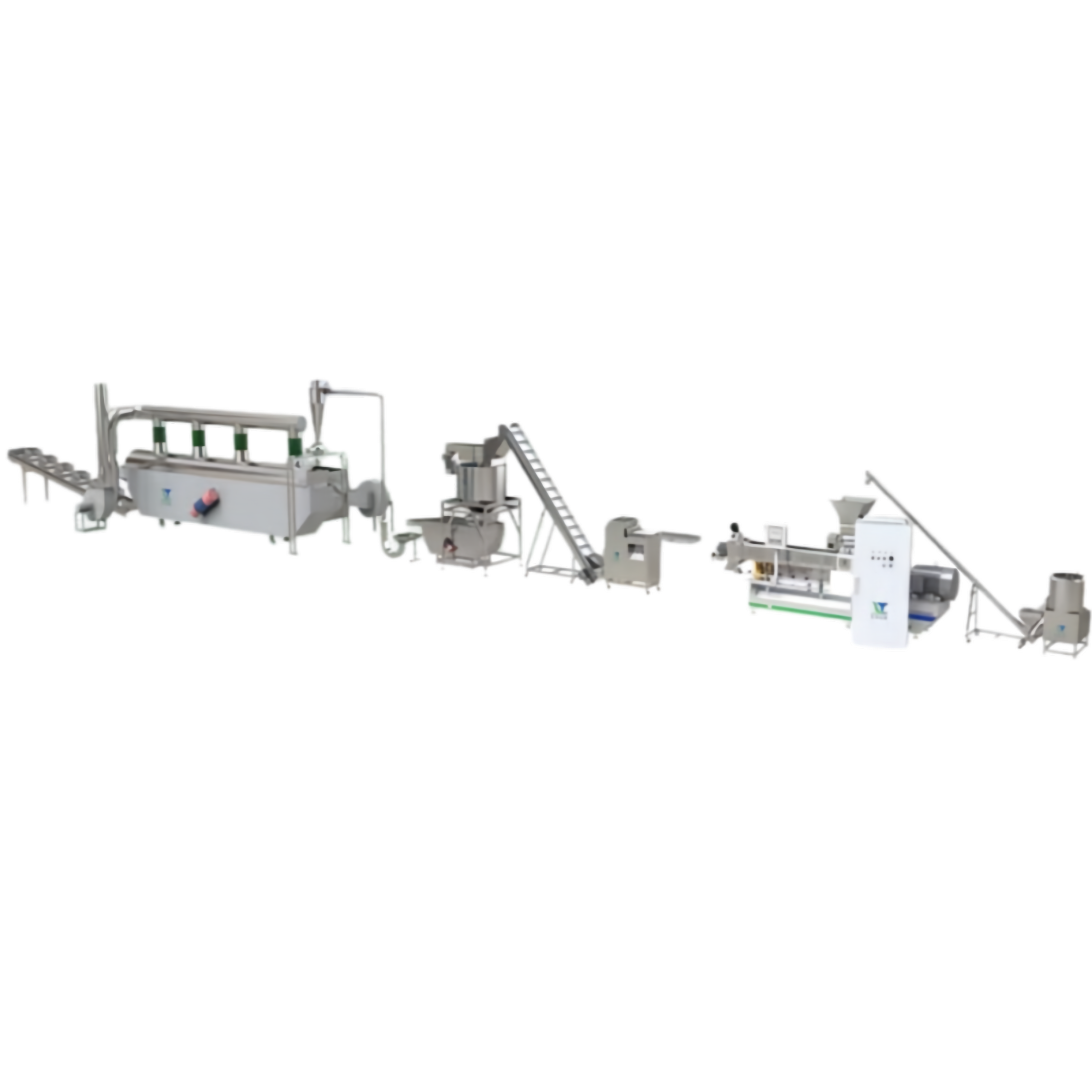
Bread Crumb Grades: Particle Size Standards and Commercial Performance Requirements
Fine, Medium, and Coarse Grades Defined by Sieve Analysis and Industry Benchmarks
Industrial bread crumb classification relies on a stack of standard sieves that mechanically separate particles into narrow size bands. The three commercial grades align with predictable ranges validated across high-volume bakeries.
| Grade | Typical Particle Size Range | Equivalent US Sieve Mesh Range | Primary Commercial Applications |
|---|---|---|---|
| Fine | 0.5 – 1.0 mm | 30 – 20 mesh | Delicate coatings, internal binder in formed protein products, low-profile crumb toppings |
| Medium | 1.0 – 2.0 mm | 20 – 10 mesh | General breading lines for poultry, seafood, vegetables; balanced adhesion and coverage |
| Coarse | 2.0 – 4.0 mm | 10 – 5 mesh | Extra‑crispy crusts, oven‑crisp coatings, textured toppings for visual and audible crunch |
A batch is considered on‑grade when at least 90% of its mass falls within the target range. Fine crumbs pack tightly, providing a smooth, uniform crust; medium grade offers a functional compromise between coverage and crispness; coarse particles create an open, crunchy matrix. Grade assignments remain consistent when mills adhere to these cutoffs—enabling coating lines to standardize recipes and predict performance without trial-and-error adjustments.
How Grade Selection Drives Texture, Oil Absorption, Adhesion, and Cooking Consistency in Breading Lines
Particle size directly governs how bread crumbs behave during application, frying, and consumption. Fine crumbs expose high surface area, absorbing oil rapidly and forming a soft, pillowy crust—but their density can trap steam, risking sogginess if dwell time or temperature isn’t precisely controlled. Coarse crumbs develop a porous lattice that limits oil uptake by up to 20%, according to industry bench tests (2023), preserving crispness longer. However, their larger geometry reduces mechanical adhesion, increasing the risk of shedding on processing belts.
Medium grade remains the workhorse in high-throughput lines: it delivers sufficient oil absorption for flavor development while maintaining crust integrity and reliable substrate bonding. Adhesion strength rises with particle interlocking—fine crumbs bond more tightly than coarse ones due to greater contact surface and packing density. Crucially, cooking consistency across shifts depends on repeatable particle distribution—a condition only achievable when screen mesh, rotor speed, and airflow are held within tight operational tolerances. Even minor deviations shift oil migration pathways and final texture, making rigorous grade classification essential for uniform quality.
Feedstock Preparation: Optimizing Moisture and Stability for Consistent Grinding
Stale vs. Fresh Bread: Drying Protocols, Pre-Grind Moisture Targets (8–12% wb), and Yield Implications
The journey to precise crumb grading begins long before material enters the machine. Fresh bread—often exceeding 35% moisture wet basis (wb)—cannot be ground effectively: it smears, clogs screens, and overheats the milling chamber. Stale bread, while drier, suffers from non-uniform moisture loss, resulting in hard crusts alongside resilient crumb sections—a heterogeneity that destabilizes particle size output.
To resolve both extremes, the industry-standard pre-grind moisture target is 8–12% wb. Achieving this requires deliberate conditioning. For fresh bread, a two-stage drying protocol is standard: rapid initial drying to reduce surface moisture below 15%, followed by 2–4 hours of tempering in a conditioning bin to allow internal moisture equilibration and prevent case-hardening. For stale bread, back mixing—recycling a portion of already-dried crumb into the feedstream—improves homogeneity by diluting residual moisture pockets.
Yield implications are significant: grinding above 12% wb typically reduces first-pass yield of the target grade by 8–10%, as damp particles deform rather than fracture cleanly. A stable, pre-conditioned feedstock ensures grinding is governed solely by controlled fracture mechanics—not variable stickiness—making machine performance predictable and repeatable.
Bread Crumb Machine Selection and Calibration for Precision Grade Control
Hammer Mill vs. Roller Mill vs. Impact Grinder: Throughput, Particle Uniformity, and Thermal Sensitivity
Selecting the right bread crumb machine hinges on matching technology to grade requirements, throughput needs, and thermal sensitivity. Each system offers distinct trade-offs:
| Grinder Type | Throughput | Particle Uniformity | Thermal Sensitivity |
|---|---|---|---|
| Hammer Mill | High (up to 2 t/h for coarse grades) | Moderate; generates fines unless screen and speed are optimized | High; friction heat can denature starch and require active cooling |
| Roller Mill | Moderate (0.5–1.5 t/h based on roll gap) | Excellent; precise narrow distribution with minimal fines | Low; gentle compression keeps temperature rise negligible |
| Impact Grinder | High for fine outcomes | Very good; shattering produces angular particles ideal for adhesion | Moderate; localized heat at impact points can alter gluten structure |
For high-volume coarse crumbs used in meat breading, hammer mills deliver throughput but demand vigilant heat management. Roller mills, though slower, provide unmatched consistency for premium uniform coatings where grade fidelity is non-negotiable. Impact grinders excel when angular, irregular particles are needed—such as for extra-crisp, fry-stable textures that resist oil logging.
Critical Adjustments on the Bread Crumb Machine: Screen Mesh, Rotor Speed, and Airflow for Target Grade Reproducibility
Consistent grade output depends on disciplined calibration of three interdependent settings—screen mesh, rotor speed, and airflow. Operators who treat these as independent variables often see drift, waste, and off-spec batches.
- Screen Mesh: Aperture is the primary physical classifier. A 2.0–3.5 mm mesh reliably yields medium crumbs; coarse grades may use 4.0 mm or larger. Switching to a finer screen reduces oversize particles but increases back-pressure and heat—requiring concurrent throughput adjustment.
- Rotor Speed: RPM determines impact energy. For coarse breading, 1,500–2,000 rpm preserves structural integrity; fine-grade production demands 3,000–4,500 rpm for uniform fracturing. A change of just 200 rpm can shift median particle size by 0.5 mm—making exact speed documentation essential per product.
- Airflow: In hammer and impact machines, pneumatic classification removes fines and cools the grinding zone. Target airflow of 2,000–3,000 m³/h (for a 30 kW mill) maintains chamber temperature below 45 °C—preventing starch gelatinization. When mesh or speed changes, damper or fan adjustments preserve classification sharpness and thermal control.
Documenting the validated mesh–speed–airflow combination for each grade establishes a reproducible standard. Facilities following this protocol routinely hold coating thickness within ±2% across production runs.
Quality Assurance and Process Validation for Grade-Specific Output
Robust quality assurance for bread crumb production rests on systematic verification—not assumption—that every batch meets its designated particle size profile. Inline sieve analysis, moisture checks (<12% wb), and visual inspections form the frontline defense. A structured sampling protocol—collecting material every 15 minutes from the discharge chute—enables early detection of shifts in mean particle diameter before off-spec product accumulates.
Process validation transforms observation into documented confidence. Prospective validation, conducted during commissioning, confirms the mill setup can consistently reproduce the target grade. Concurrent validation monitors live production, logging screen integrity, rotor speed, and airflow deviations in real time. Revalidation follows major maintenance or feedstock changes—ensuring the machine’s output remains traceably aligned with defined acceptance criteria. Together, these practices establish a verifiable chain of evidence that grade-specific standards are met, batch after batch.
Frequently Asked Questions (FAQs)
Q1: What are the three main grades of bread crumbs?
A: The three main grades are Fine (0.5–1.0 mm), Medium (1.0–2.0 mm), and Coarse (2.0–4.0 mm). Each serves specific commercial purposes like delicate coatings, balanced breading lines, or crispy crusts.
Q2: Why is consistent particle size important in bread crumb production?
A: Consistent particle size ensures predictable cooking performance, adhesion, and texture in commercial applications. It eliminates trial-and-error adjustments on coating lines.
Q3: How does particle size affect oil absorption during frying?
A: Fine particles absorb more oil due to higher surface area, while coarse crumbs limit oil uptake and preserve crispness by creating a porous lattice structure.
Q4: Why is pre-grind moisture control critical?
A: Moisture control (targeting 8–12% wb) ensures consistent grinding performance by preventing clogging, overheating, and reduced yield.
Q5: What is the role of quality assurance in bread crumb production?
A: Quality assurance verifies that each batch meets targeted size distribution, moisture levels, and texture parameters through sieve analysis, inspections, and process validation protocols.
Table of Contents
- Bread Crumb Grades: Particle Size Standards and Commercial Performance Requirements
- Feedstock Preparation: Optimizing Moisture and Stability for Consistent Grinding
- Bread Crumb Machine Selection and Calibration for Precision Grade Control
- Quality Assurance and Process Validation for Grade-Specific Output