 EN

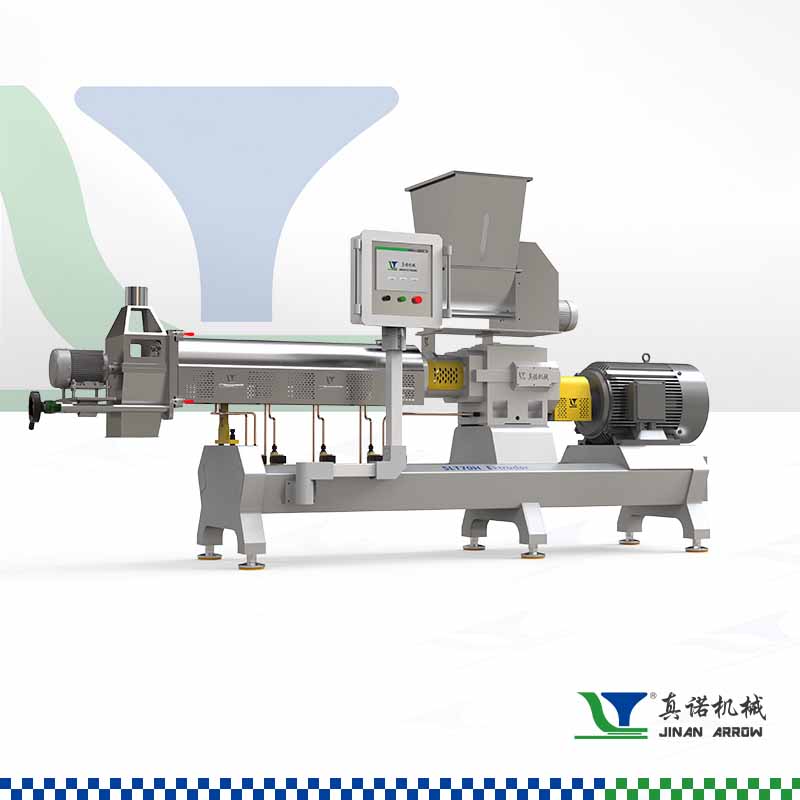
Smart Automation Driving Next-Generation Breakfast Cereal Machine Performance
AI-Optimized Extrusion and Coating for Consistent Texture and Nutrient Retention
Modern breakfast cereal machine platforms use AI to synchronize extrusion and coating stages in real time. Sensors monitor dough moisture, barrel temperature, and die pressure every few milliseconds—feeding data into machine learning models that dynamically adjust screw speed and thermal input. This closed-loop control tightens tolerances on expansion ratio, bulk density, and surface porosity, ensuring flake and puff textures remain uniform across shifts and batches.
AI also governs coating applications with precision: spray nozzles modulate flow based on real-time product velocity and mass, minimizing syrup pooling and dry clumping. Because the system compensates for natural variation in raw materials—such as grain moisture or protein content—vitamin and mineral coatings stay evenly distributed, boosting retention of heat-sensitive nutrients like thiamine and folic acid. Predictive algorithms correlate thermal and moisture profiles with shelf-life outcomes, enabling operators to trace texture deviations directly to root causes—whether a slight shift in feed rate or ambient humidity. Unlike legacy fixed-recipe systems, these platforms continuously adapt: over time, they learn from seasonal grain changes, maintaining consistent quality without manual re-tuning or reactive sampling.
IoT-Enabled Predictive Maintenance and Real-Time Yield Analytics
IoT sensors embedded in motors, gearboxes, dryer fans, and cutting heads collect vibration, temperature, and power signatures—processed locally by edge gateways. Anomaly detection models identify subtle deviations indicative of early-stage wear, triggering maintenance alerts before failure occurs. This condition-based approach replaces calendar-driven servicing, extending component life and preventing secondary damage to adjacent systems.
Simultaneously, real-time yield analytics track raw grain input, cooked dough output, and finished product weight post-coating. Flow meters and load cells calculate mass balance and moisture loss at each stage, feeding live metrics—including yield, scrap rate, and overall equipment effectiveness (OEE)—into intuitive dashboards. A sudden drop in yield initiates an automated root-cause query linked to specific sensor data, empowering operators to act decisively. Managers gain reliable, shift-to-shift performance visibility—enabling responsive production planning grounded in actual line behavior rather than historical averages. The result is measurable uptime improvement and elimination of hidden losses across the value stream.
Sustainable Innovation in Breakfast Cereal Machine Design and Operation
Compliance with EU Ecodesign and U.S. DOE Standards: Impacts on Energy Use and Material Selection
Energy performance is now a non-negotiable design criterion for breakfast cereal machines—not an optional upgrade. Under the EU Ecodesign Directive 2009/125/EC and U.S. Department of Energy (DOE) regulations (10 CFR 431.25), motors, fans, and heating systems must meet binding efficiency thresholds. The EU’s motor regulation (EU 2019/1781) mandates IE3 efficiency from July 2021 and IE4 from July 2023; parallel DOE standards impose comparable minimums for commercial and industrial motors. These rules drive adoption of high-efficiency motors, variable frequency drives, and advanced thermal insulation. Material choices follow suit: food-grade stainless steel, recyclable polymers, and modular construction support both hygiene compliance and end-of-life circularity. Crucially, compliance requires verified efficiency across full-load and partial-load operation—not just catalog-rated peaks. Non-compliant equipment faces market access restrictions in Europe and North America. As the European Commission notes, ecodesign and energy labelling policies could deliver up to 230 million tonnes of oil equivalent (Mtoe) in annual final energy savings by 2030.
Case Study: Leading Low-Temperature Dryer — 27% Lower Thermal Energy Use in Commercial Breakfast Cereal Machine Lines
A recent commercial deployment demonstrates how low-temperature drying delivers sustainability and performance in tandem. Replacing conventional high-heat dryers with a two-stage heat recovery system—featuring insulated chambers and optimized airflow—cut thermal energy use by 27% without compromising throughput (2023 field data). Reduced thermal variability also improved moisture consistency, enhancing texture uniformity and lowering reject rates. Operators observed faster ROI: continuous energy savings accumulated across all shifts, while lower operating temperatures extended service intervals for belts, seals, and heating elements. The system supports Scope 2 emissions reduction by cutting demand for purchased electricity and natural gas—and lowers ambient heat load in the facility, reducing HVAC burden. This case confirms that regulatory compliance, operational resilience, and energy efficiency are not trade-offs—they reinforce one another.
Regional Adoption Patterns Shaping Breakfast Cereal Machine Demand
Regional adoption of breakfast cereal machines reflects divergent priorities: North America prioritizes integrated automation for labor efficiency and private-label scale, while Asia-Pacific favors modular, scalable systems aligned with localized growth and capital discipline.
North America: Automation Acceleration Fueled by Private-Label Growth and Labor Optimization
Private-label expansion and persistent labor shortages are accelerating automation investments across North American cereal manufacturing. Retailers demanding consistent quality at competitive cost are driving adoption of robotic material handling, AI-powered vision inspection, and smart extrusion systems that self-adjust to ingredient variability. These technologies reduce dependence on highly skilled operators while improving throughput, coating accuracy, and cross-SKU uniformity. Large processors are converting legacy lines into fully integrated, data-linked operations; mid-sized plants are deploying targeted robotic modules—especially for packing and palletizing. Vendors are embedding remote diagnostics and cloud-based recipe management to minimize unplanned downtime. The trend is clear: moving beyond semi-automatic retrofits toward cohesive automation architectures that enable rapid changeovers, tighter quality control, and scalable multi-product output.
Asia-Pacific: Rising Investment in Modular, Scalable Breakfast Cereal Machine Systems for Localized Production
Urbanization, rising disposable incomes, and time-poor lifestyles are expanding demand for convenient, packaged breakfast foods across Asia-Pacific—spurring investment in flexible cereal production infrastructure. Small and medium manufacturers favor modular breakfast cereal machine systems that let them begin with compact extrusion, flaking, and drying units, then scale capacity incrementally. This staged rollout lowers upfront capital risk and supports localized R&D using regionally sourced grains like rice, corn, and millet. Local equipment providers are responding with shorter lead times and regional application labs—enabling brands to validate formulations before full-scale launch. Larger processors are adopting multi-format machines capable of rapid product-switching, while demand remains strong for cost-effective semi-automatic solutions. Suppliers are meeting this need with reconfigurable designs, remote monitoring capabilities, and localized service networks—reducing downtime and supporting sustainable growth.
FAQ
What role does AI play in breakfast cereal machine performance?
Artificial intelligence improvements allow breakfast cereal machines to optimize extrusion and coating processes in real time, ensuring uniform textures, better nutrient retention, and consistent quality across production cycles.
How do IoT sensors contribute to cereal machine performance?
IoT sensors enable predictive maintenance and real-time yield tracking by monitoring the equipment's health and operational efficiency, which helps reduce downtime, prevent equipment failure, and optimize production output.
What sustainability initiatives are being implemented in modern breakfast cereal machines?
Modern breakfast cereal machines are designed to comply with energy efficiency standards set by entities like the EU Ecodesign Directive and the U.S. DOE. Innovative technologies such as low-temperature drying systems further reduce energy consumption while improving product quality.
How do regional needs impact breakfast cereal machine demand?
In North America, there is a focus on integrated automation to address labor shortages and scale private-label production, while in Asia-Pacific, modular and scalable systems are preferred for localized production and cost-efficiency.
What is the impact of regulatory compliance on cereal machine design?
Regulatory compliance drives the adoption of energy-efficient components like high-efficiency motors and thermal insulation. It promotes sustainability by reducing energy consumption and greenhouse gas emissions while improving overall performance.
Table of Contents
- Smart Automation Driving Next-Generation Breakfast Cereal Machine Performance
- Sustainable Innovation in Breakfast Cereal Machine Design and Operation
- Regional Adoption Patterns Shaping Breakfast Cereal Machine Demand
-
FAQ
- What role does AI play in breakfast cereal machine performance?
- How do IoT sensors contribute to cereal machine performance?
- What sustainability initiatives are being implemented in modern breakfast cereal machines?
- How do regional needs impact breakfast cereal machine demand?
- What is the impact of regulatory compliance on cereal machine design?