 EN
EN

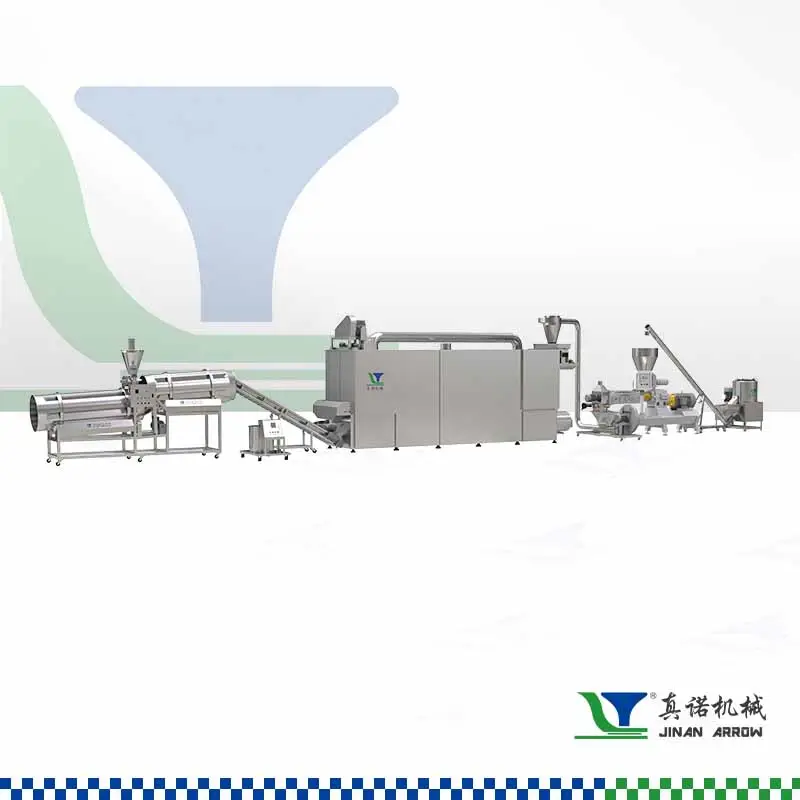
The Growing Demand for Extruded Snack Foods
The global snack food market has experienced steady growth over the past decade, and corn-based extruded snacks remain one of the most popular categories among consumers of all ages. From cheese balls and corn curls to rings and sticks, these light, crispy products have become staples in supermarkets, convenience stores, and food service operations worldwide. At the heart of this production lies the corn puff making machine — a piece of equipment that transforms simple raw materials like corn grits or corn flour into a wide variety of finished snack products through a process of mixing, heating, and extrusion.
Manufacturers and investors entering the snack food sector are increasingly recognizing that having the right corn puff making machine is not just a production decision — it is a strategic business choice. As consumer preferences evolve and competition intensifies, the demand for machines capable of producing diverse product shapes, maintaining consistent quality, and operating with reliable efficiency has grown considerably. Understanding the current trends in this industry segment can help businesses make more informed investment and operational decisions.
Automation and Intelligent Control Systems Are Becoming Standard
One of the most significant trends reshaping the corn puff making machine industry is the widespread adoption of automation and intelligent control systems. Modern production lines are increasingly built around PLC (Programmable Logic Controller) systems that allow operators to precisely manage temperature, feeding speed, cutting frequency, and other critical process parameters from a centralized interface. This kind of precise control reduces human error, ensures consistent product quality batch after batch, and makes it easier to train new operators.
For users of corn puff making machines, this trend translates into real operational benefits. Automated lines require fewer manual interventions during production, which helps reduce labor costs and minimizes contamination risks. Systems with touch-screen interfaces and real-time monitoring also allow production managers to identify irregularities quickly and make adjustments without stopping the entire line. As more manufacturers adopt these intelligent systems, the expectation is that automation will continue to become a baseline feature rather than a premium option, making modern equipment more accessible to producers at different scales.
Product Diversification Through Flexible Die and Mold Systems
Consumer tastes are continuously evolving, and snack producers are under growing pressure to introduce new shapes, textures, and flavors to stay competitive. This reality is directly influencing how corn puff making machine users evaluate their equipment. The ability to switch between different product profiles — from traditional corn curls and cheese puffs to rings, stars, pipes, and other novelty shapes — has become a key purchasing criterion.
Extrusion technology has made this flexibility more achievable. Modern machines use interchangeable dies and molds that can be swapped out relatively quickly to change the shape of the extruded product. By combining different screw configurations, die designs, and raw material formulas, a single corn puff making machine can produce a broader product portfolio without requiring a complete equipment overhaul. Manufacturers are also exploring the use of alternative grains and mixed-ingredient formulations — including rice flour, wheat flour, and other cereal-based inputs — to develop products that appeal to health-conscious or dietary-restricted consumers. This versatility gives producers a competitive edge and better return on their equipment investment.
Energy Efficiency and Food-Grade Build Quality as Competitive Differentiators
With rising energy costs and increasingly strict food safety regulations in many markets, two additional trends are gaining prominence among corn puff making machine users: energy efficiency and hygienic build quality. Equipment manufacturers are responding to these concerns by designing machines with more efficient heating and drive systems that reduce power consumption without compromising output. For production facilities running continuous operations, even modest improvements in energy efficiency can translate into meaningful cost savings over time.
Food-grade stainless steel construction has also become a widely expected standard for key contact parts of extruder machines and the broader production line. Stainless steel is durable, corrosion-resistant, and easier to sanitize — all critical requirements for a production environment that handles food ingredients continuously. Beyond materials, the design of machines is increasingly oriented toward easy disassembly and cleaning, which helps facilities comply with HACCP and other food safety frameworks. Buyers are now more likely to factor in maintenance and sanitation convenience alongside production capacity when evaluating equipment options.
Complete Production Line Integration and After-Sales Support
The way buyers approach the purchase of a corn puff making machine has also changed. Rather than sourcing individual machines and assembling production lines from multiple suppliers, many producers today prefer to work with suppliers who can offer a complete, integrated production line solution — from raw material mixing and conveying, through extrusion and cutting, to drying, flavoring, cooling, and packaging. This end-to-end approach simplifies project planning, reduces integration risks, and creates a single point of accountability for technical support.
After-sales service and technical support have also become significant factors in equipment selection. Operators who invest in a complete corn snack production line want assurance that they can get spare parts, remote or on-site technical assistance, and process optimization advice after the installation. Companies that combine strong technical expertise with responsive customer support are gaining preference over those that only compete on price. For businesses new to snack extrusion, having a knowledgeable equipment partner who understands both the machinery and the food production process can make a substantial difference during the ramp-up phase.
Frequently Asked Questions
Q1: What raw materials can a corn puff making machine process?
A corn puff making machine is primarily designed to process corn-based inputs such as corn grits and corn flour. However, many modern extruder machines are also capable of working with rice flour, wheat flour, mixed cereal powders, and other starch-based raw materials by adjusting the screw configuration, moisture content, and extrusion parameters. This flexibility allows producers to expand their product range beyond traditional corn puffs to include rice-based snacks, multi-grain products, and other formulations. Before using non-standard materials, it is advisable to consult with the equipment supplier to confirm compatibility and optimal processing settings.
Q2: How long does it take to change the product shape on a corn puff production line?
Product changeover time depends on the specific machine design and how different the new product shape is from the previous one. On modern extruder machines equipped with quick-release die systems, changing the mold or die head can typically be completed within a relatively short window. However, a full changeover also involves flushing residual material from the barrel, adjusting process parameters such as temperature and feed rate for the new formulation, and running test batches to confirm quality before full production resumes. Operators who are familiar with the equipment and well-trained on changeover procedures can minimize downtime significantly.
Q3: What should I consider when choosing between a single-screw and twin-screw extruder for corn puff production?
Single-screw extruders are generally simpler in design, easier to operate and maintain, and more cost-effective for producing straightforward corn puff products from standard corn grit formulations. They are a practical choice for producers focused on high-volume output of traditional product types. Twin-screw extruders, on the other hand, offer greater flexibility in ingredient handling — they can more effectively process formulations with higher moisture content, fat content, or complex ingredient blends. Twin-screw systems also provide better mixing and shear control, which is beneficial when producing more sophisticated product textures or when working with sensitive additives. The right choice depends on the product range you plan to produce, your budget, and the level of operational complexity your team can manage.
Table of Contents
- The Growing Demand for Extruded Snack Foods
- Automation and Intelligent Control Systems Are Becoming Standard
- Product Diversification Through Flexible Die and Mold Systems
- Energy Efficiency and Food-Grade Build Quality as Competitive Differentiators
- Complete Production Line Integration and After-Sales Support
- Frequently Asked Questions