 EN
EN

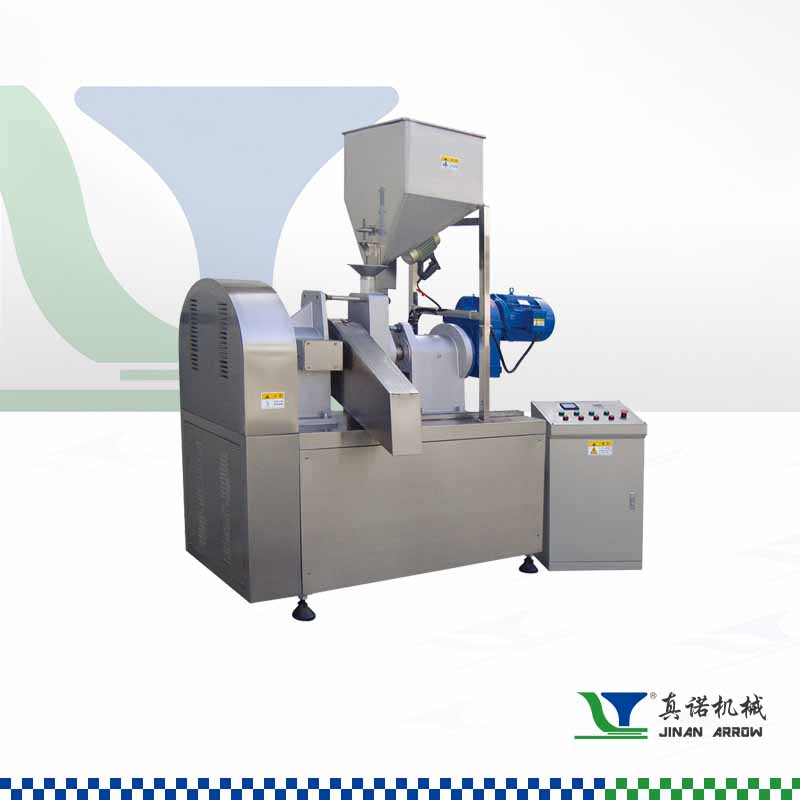
In the competitive global snack market, consistency and efficiency are the pillars of a successful manufacturing business. Kurkure, a popular type of extruded corn snack known for its unique irregular shape and crunchy texture, requires specialized processing to achieve the perfect "snap" that consumers love. Transitioning from manual or semi-automated setups to a fully integrated kurkure making machine is no longer just an upgrade—it is a strategic necessity for brands aiming to scale their production and maintain high-quality standards.
Technical Precision in Extrusion Technology
The heart of any successful snack production line is the extrusion process. For kurkure, this specifically involves a rotary head extruder. Unlike standard puff snacks that use friction and heat in a linear barrel, a professional kurkure making machine utilizes a specialized rotating die system. This mechanism rubs the corn meal between one stationary and one rotating brass plate. As the moisture in the meal heats up, it flashes into steam, puffing the product into the signature "nik naks" or irregular curls.
From an engineering perspective, this requires high-torque motors to handle the mechanical friction. Most industrial-grade models feature a main motor with a power rating of approximately 22kW to 30kW. This ensures the machine can sustain continuous operation without overheating or losing pressure, which is critical for maintaining the structural integrity of the snack. By automating this process, you eliminate the human error involved in manual feeding, ensuring that every piece of kurkure leaves the extruder with the ideal density and shape.
Maximizing Operational Efficiency and Throughput
When evaluating the ROI of a new production line, output capacity is the most significant metric. A modern, automated kurkure making machine is designed for high-volume throughput, typically ranging from 100kg/h to 150kg/h for standard lines, or much higher for specialized industrial configurations. Manual labor is significantly reduced as the system handles the transit of raw materials through the mixer, the extruder, the continuous fryer, and finally the seasoning drum.
Automation allows for a "linear flow" layout. In our experience with food engineering, a linear production path reduces the "footprint" of the factory and minimizes the time raw materials spend in the open air, which is vital for hygiene. Furthermore, an automated system ensures that the ratio of raw materials—typically corn grits and water—is kept constant via a volumetric feeder. This consistency is nearly impossible to achieve with manual loading, where small variances in moisture can lead to batches that are either too hard or too airy.
Enhancing Product Quality and Food Safety
Food safety is a non-negotiable aspect of the modern food industry. To meet international standards such as HACCP or ISO, your equipment must be constructed from food-grade materials. A high-quality kurkure making machine is primarily built from SUS304 stainless steel. This material is resistant to the corrosive nature of salts and seasonings used in snack production and is easy to sanitize.
Beyond material choice, automation enhances quality through temperature and moisture control. If the oil in the fryer is too hot, the kurkure will burn; if it is too cool, the product becomes greasy. An automated production line includes a continuous fryer with precise thermostatic controls, usually maintaining the oil between 170°C and 180°C. This ensures that the snacks are cooked perfectly every time. By removing the need for workers to manually flip or move the snacks during frying, you also reduce the risk of physical contamination, building trust with your retail partners and end consumers.
Versatility in Seasoning and Market Adaptability
One of the greatest advantages of investing in a professional kurkure making machine line is the flexibility it offers in the final stages of production. Once the snacks are extruded and fried, they pass through an automated flavoring system. This typically involves a rotating coating drum and a liquid or powder sprayer. Because the system is automated, you can precisely control the amount of seasoning applied to each batch.
This versatility allows manufacturers to quickly adapt to changing market trends. Whether your target market prefers traditional spicy masalas, cheese flavors, or localized seasonings, the automated drum ensures an even coating on every irregular surface of the kurkure. This level of uniformity is essential for brand identity. In a professional setting, we have observed that consumers are highly sensitive to "flavor gaps." An automated line ensures that the last bag produced in a shift tastes exactly like the first one, protecting your reputation in the marketplace.
Frequently Asked Questions (FAQ)
Q1: What are the primary raw materials required for a kurkure making machine?
A: The primary ingredient is corn grits (maize meal). For optimal results, the corn grits should have a consistent particle size to ensure even cooking in the rotary extruder. Water is added in precise ratios to reach the necessary moisture level for the extrusion process.
Q2: How do I change the shape of the snacks produced?
A: The "irregular" shape of kurkure is inherent to the rotary die extrusion method. However, you can influence the length and thickness of the curls by adjusting the speed of the cutting knives at the front of the extruder and fine-tuning the gap between the rotating brass plates.
Q3: Is a kurkure making machine difficult to maintain?
A: No, provided a regular maintenance schedule is followed. Because the machine uses high friction to cook the product, the brass plates (die) are considered wear parts and will eventually need replacement. Using a stainless steel (SUS304) construction simplifies daily cleaning and prevents rust, ensuring the longevity of the equipment.