 EN
EN

Conduct Market Research and Define Your Product Niche
Before investing in hardware, a successful venture begins with a granular understanding of local consumer preferences. Corn chips, primarily made from corn flour or masa, occupy a massive share of the global snack market due to their versatility and long shelf life. To start, you must identify whether your target market favors traditional toasted chips, flavored varieties, or health-conscious options like non-GMO or low-sodium snacks. Establishing a clear product niche allows you to streamline your supply chain and focus your marketing efforts. It is also the stage where you should finalize your brand identity and packaging requirements, as these will influence the secondary equipment needed alongside your primary corn chips machine production line.
Source High-Quality Raw Materials and Formulate Your Recipe
The foundation of a premium corn chip is the quality of the raw ingredients. In a professional manufacturing setting, consistency is paramount. Most commercial chips utilize high-quality corn flour, vegetable oils, and specific seasoning blends. Experience in food processing shows that the ratio of water to corn flour significantly impacts the texture and "crunch" factor of the final product. By maintaining a precise formulation, you ensure that every batch meets the same quality standards, which is essential for building brand trust with retailers and end-consumers. We recommend consulting with food technologists to stabilize your recipe for large-scale production, ensuring the flavor remains consistent even when the corn chips machine is running at full capacity.
Select the Right Corn Chips Machine for Scalable Production
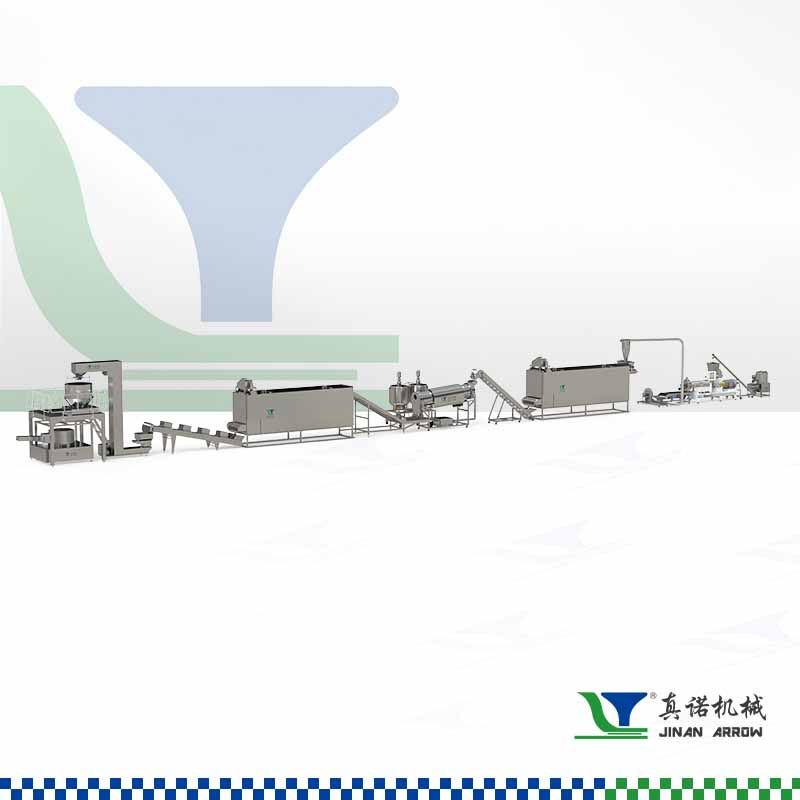
The most critical technical decision in this business is selecting an efficient production line. For a medium-to-large scale operation, a continuous extrusion system is the industry standard. This involves several integrated stages: mixing, extruding, cutting, frying, and seasoning. When looking at high-performance equipment, technical specifications such as the power of the main motor and the heating capacity are vital. For instance, advanced systems often feature a 22kW or 30kW main motor to handle the heavy torque required for corn dough extrusion. A robust corn chips machine should offer a production capacity ranging from 100kg/h to 150kg/h for startup lines, or up to 500kg/h for established factories. Choosing a system with a stainless steel construction (typically SUS304) ensures food safety compliance and long-term durability against the corrosive effects of salt and seasonings.
Optimize the Extrusion and Frying Process for Quality Control
Expertise in snack manufacturing often boils down to mastering the extrusion process. The twin-screw extruder is the heart of the operation; it uses high pressure and temperature to cook the corn dough and shape it through specialized dies. By changing the mold on your corn chips machine, you can produce various shapes like triangles, hexagons, or strips without changing the entire line. Following extrusion, the chips enter a continuous fryer. Maintaining a stable oil temperature—typically between 170°C and 180°C—is crucial. If the temperature is too low, the chips become greasy; if it is too high, they burn. Professional-grade fryers often include an automatic oil filtration system to extend the life of the oil and maintain the objective quality of the snack.
Implement Strict Food Safety and Packaging Protocols
Trustworthiness in the food industry is built on transparency and safety standards. Once the chips are seasoned in a rotary drum, they must be cooled and moved immediately to the packaging station. Automated nitrogen-flushing packaging machines are recommended to prevent oxidation and keep the chips crisp for months. From an engineering perspective, your facility layout should follow a linear flow to prevent cross-contamination between raw flour storage and the finished product area. Adhering to international standards like HACCP or ISO 22000 not only ensures consumer safety but also opens doors for exporting your corn chips to global markets. Regular maintenance of your corn chips machine and training staff on hygiene protocols are the final steps in securing a sustainable and profitable manufacturing business.
Technical FAQ
Q1: How much production capacity do I need to start?
A: For most startups, a capacity of 100kg/h to 150kg/h is the ideal balance between investment and efficiency. This scale allows you to test market demand without high operational overhead. As demand grows, industrial lines can be scaled up to 500kg/h to maximize ROI.
Q2: Why is a twin-screw extruder better for corn chips?
A: A twin-screw extruder provides superior torque and mixing stability compared to single-screw models. It ensures the corn dough is cooked uniformly under precise temperature and pressure, resulting in a consistent "crunch" and the ability to produce complex shapes with minimal waste.
Q3: Is nitrogen flushing mandatory for packaging?
A: While not mandatory, it is highly recommended for commercial snack production. Nitrogen prevents oil oxidation (rancidity) and creates a protective air cushion inside the bag. This extends shelf life to several months and ensures the chips remain intact and crisp during long-distance shipping.
Table of Contents
- Conduct Market Research and Define Your Product Niche
- Source High-Quality Raw Materials and Formulate Your Recipe
- Select the Right Corn Chips Machine for Scalable Production
- Optimize the Extrusion and Frying Process for Quality Control
- Implement Strict Food Safety and Packaging Protocols
- Technical FAQ