 EN
EN

Understanding Your Product and Market First
Before evaluating specific soy protein machine models, industrial buyers must clarify the end product and target market. A soy protein machine configured for producing small, granular textured vegetable protein (TVP) chunks for meat extension in sausage and burger applications differs fundamentally from a line designed for large, fibrous slabs intended for plant-based chicken breast or steak analogs. Product form — chunk size, fiber orientation, hydration rate, and color — determines the extruder configuration, die design, and downstream cutting and drying equipment. Equally important is the target market's regulatory environment: products destined for the European Union may require equipment with full traceability documentation and EHEDG-compliant hygienic design, while products for markets with less stringent requirements may have different equipment specifications. Beginning with a clear product specification sheet rather than starting from equipment catalogs is the most reliable way to match a soy protein machine to actual production needs.
Extruder Type and Configuration: The Heart of Soy Protein Processing
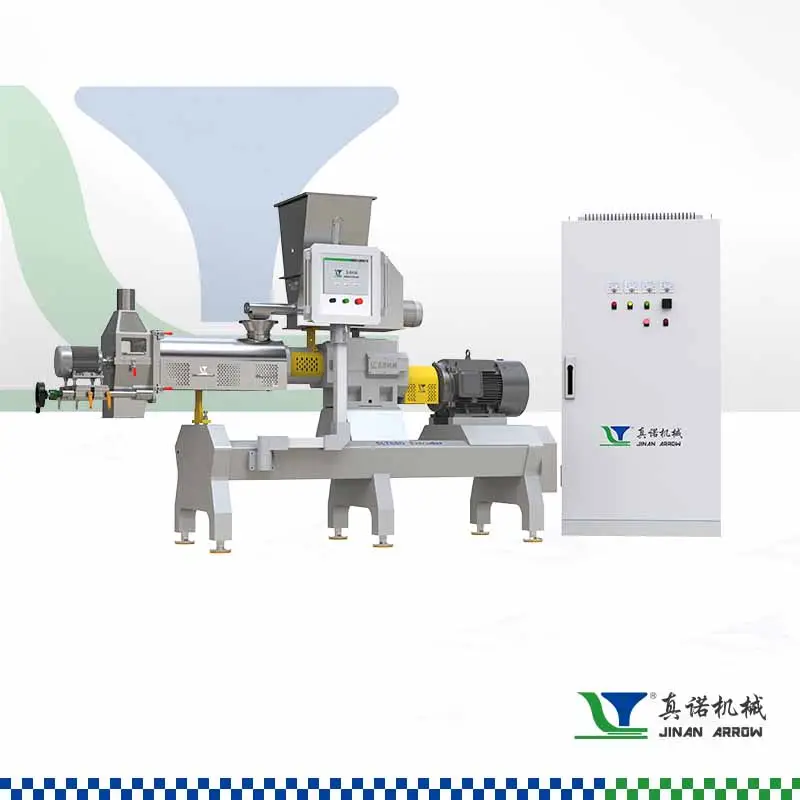
The twin-screw extruder is the core of any soy protein machine, and its configuration determines both product quality and operational flexibility. For TVP production, co-rotating twin-screw extruders are the industry standard because they provide superior mixing, self-wiping screw profiles that prevent material buildup, and the high shear forces necessary to denature soy protein and create the fibrous texture that mimics meat. Key extruder specifications to evaluate include the screw diameter, which correlates with throughput capacity (typically 200 to 2,500 kg/h across models like the ETT65 through ETT98 series), the length-to-diameter (L/D) ratio, and the number of independently controlled temperature zones along the barrel. A longer L/D ratio — typically 24:1 to 36:1 for TVP applications — provides more residence time for protein denaturation and texturization. The cooling die at the extruder exit is a critical component unique to TVP production: it must reduce the product temperature from approximately 150°C to below 100°C in a controlled manner, allowing the protein fibers to align and set before the product exits. A poorly designed cooling die results in inconsistent fiber structure and variable hydration rates in the finished product.
Raw Material Flexibility and Formulation Support
Modern soy protein machines must handle more than just defatted soybean meal. The growing plant-based protein market demands flexibility to process pea protein, peanut meal, wheat gluten, and various protein blends. Each raw material has distinct processing characteristics — pea protein, for example, requires higher moisture and slightly lower extrusion temperatures than soy to achieve comparable fiber development. A soy protein machine with a flexible screw configuration, wide-range temperature control (capable of maintaining 80-180°C across different zones), and a preconditioner that can introduce both water and steam at controlled rates provides the formulation versatility that processors need to respond to changing market demands. Buyers should request trial runs with their intended raw material blends before finalizing equipment specifications. A supplier that operates an in-house application center — such as a dedicated food innovation laboratory — can conduct formulation trials and provide process parameter recommendations, reducing the trial-and-error period after installation.
Capacity, Footprint, and Utility Requirements
Production capacity requirements for a soy protein machine span a wide range. Small to medium processors entering the plant-based meat market may start with 200-600 kg/h, while established manufacturers supplying major food brands may require 1,000-2,500 kg/h. The extruder model selection should account not just for current demand but for a realistic growth trajectory over 3-5 years. Physical footprint is another constraint: a complete soy protein machine — including the extruder, cooling die, cutter, dryer, and control cabinet — can occupy 30-60 square meters of factory floor space, with additional area needed for raw material storage, finished product handling, and operator workspace. Utility requirements include electrical power (typically 150-400 kW depending on extruder size), process steam (300-800 kg/h), cooling water for the barrel and cooling die, and compressed air for pneumatic controls. Verifying that the factory's existing utility infrastructure can support the new equipment without costly upgrades is an essential pre-purchase step.
Quality Control and Fiber Structure Evaluation
The quality of textured soy protein is primarily judged by its fiber structure — the degree to which the product mimics the layered, striated texture of animal muscle tissue. Key quality indicators include hydration rate (the ratio of water absorbed per unit of dry product, typically 2.5:1 to 4:1 for TVP), water holding capacity after hydration, and fiber integrity after rehydration and cooking. Buyers evaluating a soy protein machine should request product samples from the supplier's trial facility and conduct their own quality tests, including hydration tests, texture analysis (measuring cutting force and tensile strength of hydrated fibers), and sensory evaluation. The machine's ability to consistently produce the specified fiber structure across entire production shifts — not just during supervised trials — should be verified through reference visits to existing customers if possible.
Application Example: Expanding from Soy to Multi-Protein Production
A food ingredient manufacturer in South Asia initially purchased a soy protein machine configured exclusively for defatted soy flour, producing TVP granules for the domestic meat processing industry. Within two years, demand from export markets for pea-protein-based products and blended soy-pea formulations emerged. The original extruder, while adequate for soy, lacked the temperature flexibility and screw configuration options needed for pea protein, which has a lower denaturation temperature and different rheological behavior. Upgrading to a twin-screw extruder with a configurable screw profile, an independently controlled multi-zone barrel heating and cooling system, and a preconditioner capable of precise moisture addition allowed the manufacturer to process soy, pea, and soy-pea blends on the same machine. The investment in a more flexible soy protein machine enabled the company to enter two new export markets within 18 months of commissioning the upgraded line.
Certifications and Compliance Documentation
For processors supplying multinational food companies or exporting to regulated markets, the soy protein machine must come with appropriate compliance documentation. CE certification for EU-bound equipment, ISO 9001 quality management system certification for the manufacturer, and detailed material certificates for all food-contact parts (typically 304 or 316 stainless steel) are baseline requirements. Buyers should also verify that the equipment design supports HACCP principles — smooth, crevice-free surfaces, sloped frames for drainage, and accessibility for cleaning and inspection. A supplier with a documented quality management system, such as ISO 9001 certification, provides an additional layer of assurance that the equipment is manufactured to consistent standards.
Table of Contents
- Understanding Your Product and Market First
- Extruder Type and Configuration: The Heart of Soy Protein Processing
- Raw Material Flexibility and Formulation Support
- Capacity, Footprint, and Utility Requirements
- Quality Control and Fiber Structure Evaluation
- Application Example: Expanding from Soy to Multi-Protein Production
- Certifications and Compliance Documentation