 EN

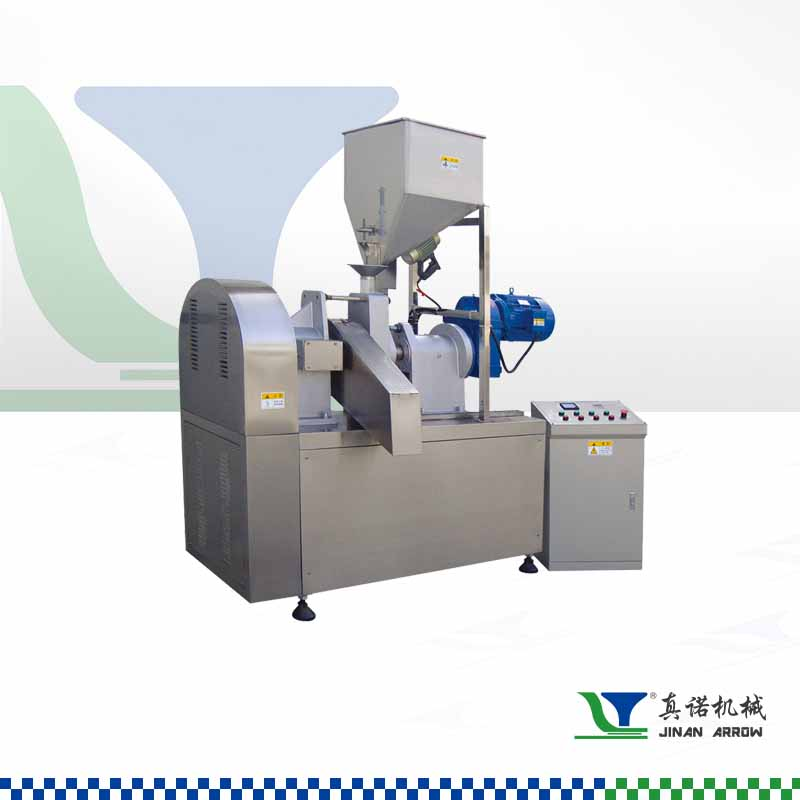
The Cheeto Extruder: Core Function and System Overview
What Is a Cheeto Extruder? Defining the Machine’s Role in Snack Production
A Cheeto extruder is a specialized high-temperature short-time (HTST) food extrusion system engineered to continuously transform preconditioned cornmeal slurry into light, aerated cheese puffs with a signature crunch. Unlike batch cooking, it integrates conveying, mixing, cooking, and shaping in a single automated operation. Pre-hydrated cornmeal enters the extruder, where intensive shear and controlled thermal energy gelatinize starch, denature proteins, and build melt pressure—enabling rapid expansion at the die. At exit, the sudden pressure drop flashes internal moisture into steam, expanding the dough into a porous, bubbly structure that solidifies almost instantly. By tightly regulating temperature, moisture, and screw speed, the extruder ensures consistent density and mouthfeel—making it the critical core of modern crunchy snack manufacturing.
Key Components: Screw Design, Barrel Zones, and Die Assembly
Precision-engineered components work in concert to convert raw cornmeal into finished puffs:
- Screw design – Typically a co-rotating twin-screw configuration, the shaft incorporates conveying, kneading, and reverse-pitch elements to control material forwarding, shear intensity, and melt homogeneity—directly influencing starch gelatinization and final expansion.
- Barrel zones – A jacketed barrel divided into feed, compression, and metering sections enables independent temperature control. Heated zones (140–165 °C) progressively cook and plasticize the slurry while maintaining optimal viscosity for die flow.
- Die assembly – The die plate shapes the pressurized melt into strands; a rotating face cutter slices the emerging rope at high speed to produce uniform piece lengths—critical for consistent crunch and efficient post-extrusion oil absorption and seasoning adhesion.
Extrusion Process Mechanics: From Dough to Crunchy Puff
Shear, Heat, and Pressure: How the Cheeto Extruder Transforms Cornmeal Slurry
Inside the barrel, the moistened cornmeal slurry undergoes intense mechanical shear from the rotating screw, while barrel heaters and frictional heat raise its temperature rapidly. This combination causes starch granules to absorb water, swell, and fully gelatinize; proteins simultaneously denature. Alternating conveying and mixing screw elements ensure progressive homogenization of the melt, building internal pressure to 30–50 bar—sufficient to compress the dough and guarantee thorough hydration and thermal transfer. This precisely managed environment converts slurry into a viscoelastic mass primed for expansion. Even minor deviations in residence time or heating can compromise gelatinization, directly affecting final crispness—the extruder’s ability to balance shear, heat, and pressure in one continuous step is foundational to the puff’s light texture and distinctive crunch.
Expansion and Puffing at the Die Exit: The Birth of Cheeto Shape and Porosity
As the superheated dough exits the die, pressure plummets from ~35 bar to atmospheric levels—flashing internal moisture into steam and inflating the starch matrix. This millisecond-scale expansion creates a fine, interconnected network of air cells, which solidify upon cooling to lock in porosity and rigidity. Die geometry determines cross-sectional shape—a curved orifice yields the iconic Cheeto curl—while synchronized face-cutting produces uniform lengths. Starch glass transition during rapid cooling sets the rigid, crunchy exterior. Because expansion is so sensitive, precise control of moisture (18–22% at die exit) and melt temperature is essential: too little moisture limits puffing, yielding dense pieces; too much weakens cell walls, resulting in fragile, crumbly textures. The outcome is a low-density, structurally robust puff—ready for drying and flavoring.
Critical Parameters That Define Crunch: Temperature, Moisture, and Residence Time
Barrel Zone Control (140–165°C) and Its Effect on Starch Gelatinization
Barrel temperature governs starch gelatinization—the pivotal transformation of raw cornmeal into an expandable, cohesive melt. Multi-zone heating maintains a steady thermal gradient, typically rising from 140°C at the feed throat to ~165°C near the die. This progression ensures even cooking without scorching. Within this range and a residence time of 10–20 seconds, starch granules fully hydrate, swell, and lose crystallinity—achieving optimal melt viscosity. Insufficient heat leaves ungelled granules that hinder expansion and yield dense, hard puffs; excessive heat degrades starch polymers, producing weak, crumbly textures. Precise zone management allows operators to tune melt rheology for the target porous structure and crisp bite.
Moisture Optimization (18–22%) and Pressure (30–50 bar) for Consistent Expansion
Moisture content (18–22%) serves a dual role: as a plasticizer that lowers melt viscosity for smooth conveyance, and as the primary blowing agent for expansion. Under barrel pressures of 30–50 bar, water remains superheated—then flashes to steam at the die, inflating the starch matrix into foam. Below 18% moisture, the melt becomes overly viscous, increasing torque and risking uneven expansion; above 22%, excess water cools the melt and destabilizes cell walls, yielding soft, non-crisp puffs. Maintaining this narrow moisture-pressure window ensures uniform expansion across every piece—delivering the light, resilient crunch consumers expect.
Post-Extrusion Finishing: Frying, Drying, and Flavor Adhesion
After extrusion and cutting, the hot, plastic puffs move to a continuous dryer where moisture drops from ~20–25% to a stable 2–5%. This step solidifies the porous starch matrix and locks in crispness—insufficient drying results in chewiness and poor seasoning adhesion. Once cooled to room temperature, puffs may undergo flash-frying or baking to enhance surface rigidity and golden color, depending on the product variant. Flavor application follows: a fine mist of vegetable oil is sprayed to act as a binder, then dry seasoning powders are tumbled in a rotating drum until evenly coated. Over-oiling leads to greasiness; under-oiling causes seasoning to shed. Crucially, proper moisture management during drying is the unseen lever ensuring both structural crunch and reliable, clingy cheese coating—the final hallmark of the snack.
FAQs
What is the primary role of a Cheeto extruder in snack production?
The primary role of a Cheeto extruder is to transform preconditioned cornmeal slurry into light, aerated cheese puffs by integrating conveying, mixing, cooking, and shaping into a single automated operation.
How do screw design and barrel zones influence the extrusion process?
Screw design controls material forwarding, shear intensity, and melt homogeneity, while barrel zones provide controlled heating essential for starch gelatinization and melt plasticization.
Why is moisture content critical during extrusion?
Moisture content (18–22%) is vital as it lowers melt viscosity for conveyance and serves as the primary blowing agent that creates the porous puff texture upon die exit.
What parameters affect the crunch and texture of Cheetos?
The crunch and texture are influenced by barrel temperature, moisture content, pressure, residence time, and post-extrusion drying and frying techniques.